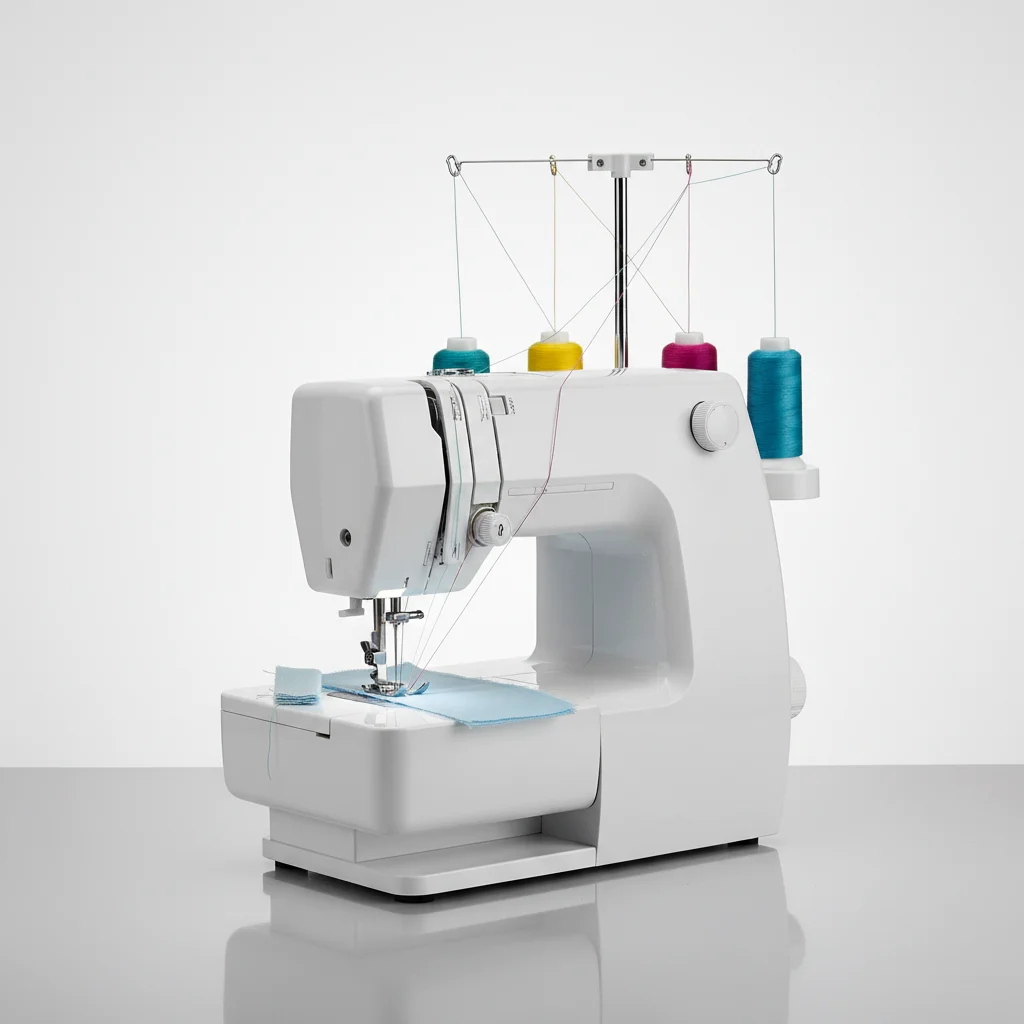
A serger sewing machine, also known as an overlock machine, is a specialized type of sewing machine that uses multiple threads (typically 3, 4, or 5) to create strong, professional-looking seams that enclose the raw edge of fabric. Unlike a standard sewing machine that forms a single stitch with two threads, a serger simultaneously trims the fabric edge, stitches it, and overcasts it, resulting in a clean, durable finish that prevents fraying. You might need a serger if you frequently work with knit fabrics, desire professional garment finishes, or want to speed up your sewing projects, especially for items like activewear, children’s clothing, or home decor.
How a Serger Differs from a Standard Sewing Machine
The fundamental difference lies in their function and stitch formation. A standard sewing machine creates a lockstitch, ideal for joining two pieces of fabric together with a single line of stitching. A serger, however, is designed for finishing edges and creating stretchable seams. It features a cutting blade that trims excess fabric just before the needles and loopers form the stitches, creating a neat, enclosed edge. This simultaneous cutting and stitching process is what gives serged seams their characteristic professional appearance and durability, particularly on stretchy or delicate fabrics.
Another key distinction is the number of threads. While a conventional machine typically uses two threads (one from the spool, one from the bobbin), a serger can use three, four, or even five threads. This multi-thread capability allows for various stitch types, such as a 3-thread overlock for basic finishing, a 4-thread overlock for strong, stretchable seams, and a 5-thread safety stitch for industrial-strength garment construction. The absence of a bobbin in most sergers also means continuous, high-speed stitching.
Key Benefits of Using a Serger
|
Our Picks for the Best Sewing Machine in 2026
As an Amazon Associate I earn from qualifying purchases.
|
||
| Num | Product | Action |
|---|---|---|
| 1 | Brother FB1757X Mechanical Sewing Machine |

|
| 2 | SINGER Heavy Duty 4423 Meltwater Blue High Speed Sewing Machine with Accessory Kit | Strong Motor With Enhanced Piercing Power, 97 Stitch Applications, Full Metal frame, 1-step Buttonhole & LED Light |
|
| 3 | SINGER Heavy Duty 4411 High-Speed Sewing Machine with Accessory Kit | Strong Motor, Enhanced Piercing Power, 69 Stitch Applications, Full Metal Frame, 4-Step Buttonhole & LED Light, Grey |
|
| 4 | Brother XM2701 Sewing Machine, Lightweight, Full Featured, 27 Stitches, 6 Included Feet |
|
| 5 | Janome Cat Fancy Easy-to-Use Sewing Machine with Interior Metal Frame, Bobbin Diagram, Tutorial Videos, Made with Beginners in Mind!, Multi-Color |
|
| 6 | Brother Sewing and Quilting Machine, XR3774, 37 Built-in Stitches, Wide Table, 8 Included Sewing Feet |
|
| 7 | SINGER Heavy Duty 4452 High-Speed Sewing Machine with Accessory Kit | Strong Motor with Enhanced Piercing Power, 110 Stitch Applications, Full Metal Frame, 1-Step Buttonhole & LED Lights, Grey |
|
| 8 | Brother CS7000X Computerized Sewing and Quilting Machine, 70 Built-in Stitches, LCD Display, Wide Table, 10 Included Feet, White |
|
| 9 | Brother RLX3817 17-Stitch Sewing Machine, White(Renewed) |
|
| 10 | Brother SE700 Sewing and Embroidery Machine, Wireless LAN Connected, 135 Built-in Designs, 103 Built-in Stitches, Computerized, 4" x 4" Hoop Area, 3.7" Touchscreen Display, 8 Included Feet, White |
|
The primary benefit of a serger is its ability to produce highly professional and durable finishes. For garments, this means seams that stretch with the fabric without popping, making it indispensable for activewear, swimwear, and knit clothing. The built-in cutting mechanism ensures perfectly trimmed edges, eliminating the need for separate trimming and reducing bulk. This results in a cleaner, more polished look that rivals ready-to-wear clothing.
Furthermore, sergers significantly increase sewing speed. Because they trim, stitch, and overcast in one pass, projects that would take multiple steps on a conventional machine can be completed much faster. This efficiency is particularly valuable for production sewing or when working on large projects. The differential feed feature, common on most sergers, also helps prevent stretching or puckering on tricky fabrics, ensuring smooth, even seams every time.
When a Serger is Essential for Your Projects
A serger becomes an essential tool for specific types of sewing projects. If you frequently sew with knit fabrics like jersey, fleece, or spandex, a serger’s stretchable seams are invaluable for preventing popped stitches and maintaining the fabric’s elasticity. It’s also crucial for creating durable, professional finishes on woven fabrics, especially for items that will undergo frequent washing, such as children’s clothing, towels, or home decor items like curtains and pillow covers.
Consider a serger if you are making:
- Activewear and swimwear
- Children’s clothing and baby items
- Professional-looking garments from knits or wovens
- Home decor items requiring durable, finished edges
- Projects where speed and efficiency are a priority
For those aiming for a high-quality, ready-to-wear finish on their handmade items, a serger is an investment that pays off in both time saved and superior results.
Choosing the Right Serger for Your Needs
When selecting a serger, consider the types of projects you’ll be undertaking and your budget. Entry-level sergers typically offer 3- and 4-thread overlock stitches, which are sufficient for most home sewers. More advanced models may include 2-thread capabilities, coverstitch options, and air-threading systems for easier setup. Look for features like differential feed, adjustable stitch length and width, and easy-to-follow threading guides.
It’s also important to consider the machine’s durability and the availability of accessories and support. Reading reviews and comparing models can help you make an informed decision. While a serger has a learning curve, the benefits of professional finishes and increased efficiency make it a worthwhile addition to any serious sewer’s toolkit.
