The best sewing machines with embroidery features for 2026 combine advanced technology with user-friendly design, offering capabilities from basic monogramming to intricate multi-color designs. Top models like the Brother SE2000 (around $1,500) and the professional Baby Lock Altair 2 (up to $14,000) provide a range of options for all skill levels, enabling users to transform fabrics into personalized masterpieces with efficiency and precision.
What is a Sewing Machine?
A sewing machine is a device that uses needles and thread to stitch fabric and other materials together. Initially developed during the first Industrial Revolution to decrease manual sewing labor, these machines rapidly evolved from simple hand-cranked devices to sophisticated electronic models. Their primary function, at its core, remains consistent: to create durable, uniform stitches much faster and more efficiently than hand sewing. Over time, their capabilities expanded dramatically, moving beyond basic stitching to include decorative functions like embroidery.
The history of the sewing machine is a fascinating tale of innovation. Early attempts in the late 18th century focused on mechanizing the sewing process, but it wasn’t until the mid-19th century that practical, widely adopted machines emerged. Elias Howe and Isaac Singer were pioneers, introducing designs that laid the groundwork for modern machines. The advent of electricity and, later, microprocessors revolutionized their design, giving rise to computerized models that offer a vast array of stitches and automated features, including the intricate art of machine embroidery.
Types of Sewing Machines
The diverse needs of sewers across various skill levels and project types have led to the development of several distinct categories of sewing machines. Understanding these types is crucial for making an informed decision about which machine best suits your specific requirements.
Home Sewing Machines
Designed primarily for personal use, hobbyists, and small-scale projects, home sewing machines are typically compact, user-friendly, and versatile. They come equipped with a range of stitches, from basic utility stitches to decorative options, and often include features like automatic needle threaders and adjustable speed control. These machines are perfect for crafting garments, home décor items, quilting, and simple repairs. Their portability and ease of storage make them a popular choice for aspiring sewers and those who enjoy creative pursuits at home.
Industrial Sewing Machines
In stark contrast, industrial sewing machines are built for heavy-duty, continuous operation in commercial or manufacturing environments. They are significantly more robust, faster, and often specialized for a particular type of stitching or fabric. These machines are engineered for durability and high-volume output, capable of handling thick materials and complex tasks that would overwhelm a domestic machine. They lack the versatility of home machines but excel in their dedicated function, offering unparalleled speed and power for professional production lines.
Mini Portable Sewing Machines
|
Our Picks for the Best Sewing Machine in 2026
As an Amazon Associate I earn from qualifying purchases.
|
||
| Num | Product | Action |
|---|---|---|
| 1 | Brother CS7000X Computerized Sewing and Quilting Machine, 70 Built-in Stitches, LCD Display, Wide Table, 10 Included Feet, White |

|
| 2 | SINGER Heavy Duty 4452 High-Speed Sewing Machine with Accessory Kit | Strong Motor with Enhanced Piercing Power, 110 Stitch Applications, Full Metal Frame, 1-Step Buttonhole & LED Lights, Grey |
|
| 3 | Brother XM2701 Sewing Machine, Lightweight, Full Featured, 27 Stitches, 6 Included Feet |
|
| 4 | Brother SE700 Sewing and Embroidery Machine, Wireless LAN Connected, 135 Built-in Designs, 103 Built-in Stitches, Computerized, 4" x 4" Hoop Area, 3.7" Touchscreen Display, 8 Included Feet, White |
|
| 5 | Brother RLX3817 17-Stitch Sewing Machine, White(Renewed) |
|
| 6 | SINGER Heavy Duty 4423 Meltwater Blue High Speed Sewing Machine with Accessory Kit | Strong Motor With Enhanced Piercing Power, 97 Stitch Applications, Full Metal frame, 1-step Buttonhole & LED Light |
|
| 7 | SINGER Heavy Duty 4411 High-Speed Sewing Machine with Accessory Kit | Strong Motor, Enhanced Piercing Power, 69 Stitch Applications, Full Metal Frame, 4-Step Buttonhole & LED Light, Grey |
|
| 8 | Janome Cat Fancy Easy-to-Use Sewing Machine with Interior Metal Frame, Bobbin Diagram, Tutorial Videos, Made with Beginners in Mind!, Multi-Color |
|
| 9 | Brother FB1757X Mechanical Sewing Machine |
|
| 10 | Brother Sewing and Quilting Machine, XR3774, 37 Built-in Stitches, Wide Table, 8 Included Sewing Feet |
|
Mini portable sewing machines represent the most compact and lightweight option, ideal for on-the-go repairs, small crafting projects, or as a convenient backup machine. These machines prioritize portability, often running on batteries or a small power adapter. While they offer fewer features and a more limited stitch selection compared to full-sized models, their ease of transport makes them invaluable for quick fixes, dorm rooms, or travel. They are perfect for beginners testing the waters of sewing without a significant investment.
Computerized/Electronic Sewing Machines
The cutting-edge of sewing technology, computerized and electronic sewing machines offer advanced features, precision, and ease of use. These machines incorporate microprocessors that control needle movement, stitch patterns, and other functions, allowing for an extensive library of built-in stitches, customizable designs, and automated tasks. Many models feature LCD touchscreens for intuitive navigation and editing, USB ports for design transfer, and wireless connectivity. Sewing machines with embroidery capabilities fall squarely into this category, leveraging computer control to create intricate, multi-color embroidery designs automatically. They bridge the gap between traditional sewing and digital artistry, offering unparalleled creative freedom.
Table Comparing Key Features of the Top 5 Sewing Machines with Embroidery Features
Choosing the right sewing and embroidery machine can be a game-changer for your creative projects. Here’s a detailed comparison of five leading models for 2026, highlighting their core features and ideal applications.
| Machine Model | Price Range | Embroidery Area | Built-in Designs / Fonts | Connectivity | Key Features | Best For |
|---|---|---|---|---|---|---|
| Brother SE2000 | ~$1,500 | 5″ x 7″ | 193 designs / 13 fonts | Wireless, USB | Large touchscreen, automatic thread cutting, speed controls, needle up/down. Upgraded from SE1900. | All-around users, from intermediate to advanced, seeking versatility and advanced features. |
| Brother SE700 | ~$580 | 4″ x 4″ | 135 designs / 10 fonts | USB | Budget-friendly, color LCD screen for editing, drop-in bobbin, free-motion sewing, variable speeds, lightweight. | Beginners or those on a budget seeking a reliable introduction to sewing and embroidery. |
| Baby Lock Altair 2 | ~$11,000-$14,000 | 9.5″ x 14″ | 534 designs / 30 fonts | Bluetooth, USB | Massive 10.1″ touchscreen, IQ Intuition Positioning App for wireless design upload, automatic thread cutting/tie-off, includes four hoops. | Professional users, home businesses, or serious hobbyists requiring extensive features and a large embroidery field. |
| Bernette B79 | ~$2,300 | 10″ x 6.3″ | 208 designs | USB | Tie-off and automatic thread cutting, massive work table, 1,000 stitches per minute, customizable stitches via touchscreen drawing. | Serious hobbyists and prosumers looking for advanced features and a large hoop for diverse projects. |
| Janome Memory Craft 9850 | ~$2,500-$3,000 | (Not specified in detail, generally large) | 175 embroidery designs / 200 sewing stitches | USB | Combo sewing and embroidery, full-color LCD screen for design control and preview, numerous ease-of-use functions. | Advanced hobbyists or small home business owners needing robust performance and design versatility. |
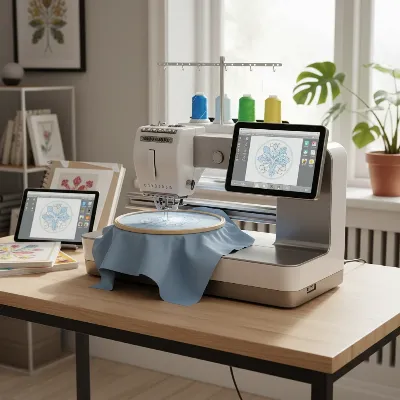 A modern computerized sewing and embroidery machine in a well-lit home studio setting, with fabric hooped and ready for embroidery
Buying Guide: How to Choose the Right Sewing Machine with Embroidery Features
Selecting the perfect sewing machine with embroidery features involves more than just picking a popular model. It requires a thoughtful assessment of your personal needs, budget, and the specific capabilities that will enhance your creative journey.
Determine Your Usage Needs
Before diving into specifications, consider your primary purpose. Are you a beginner looking to personalize gifts and mend clothes, or an experienced crafter planning intricate quilt blocks and large custom designs? The frequency of use and complexity of your intended projects will heavily influence the type of machine you need. For instance, occasional users might find a basic combo machine sufficient, while those envisioning a home-based embroidery business would benefit from a more robust, feature-rich model with a larger embroidery area.
Budget
Sewing and embroidery machines span a wide price range, from entry-level options under $600 to professional-grade models costing several thousands of dollars. Establishing a realistic budget is crucial. While a higher price often correlates with more features and larger embroidery fields, many mid-range machines offer excellent value and functionality for most users. Remember to also factor in potential costs for accessories like additional hoops, threads, stabilizers, and digitizing software.
Essential Features
Several key features significantly impact the performance and user experience of a sewing and embroidery machine:
- Embroidery Area (Hoop Size): This dictates the maximum size of your embroidery designs without re-hooping. Common sizes include 4″ x 4″ for small monograms and 5″ x 7″ or larger for more ambitious projects.
- Built-in Designs and Fonts: A generous selection provides immediate creative options, especially for beginners. However, look for USB or wireless connectivity if you plan to import custom designs.
- Connectivity Options: USB ports are standard for importing designs. Higher-end models may offer Wi-Fi or Bluetooth for seamless transfer from computers or mobile apps.
- LCD Touchscreen Display: A clear, intuitive, and ideally full-color touchscreen makes it easier to preview, edit, and adjust designs directly on the machine.
- Automatic Features: Features like automatic needle threading, automatic thread cutting, and quick-set bobbin systems enhance convenience and save time, making the process smoother, particularly for intricate, multi-color embroidery.
- Sewing Capabilities: Ensure the machine offers a good range of sewing stitches, adjustable speed, and robust construction if you intend to use it for both sewing and embroidery.
Reputable Brands
Opting for machines from well-established brands like Brother, Bernette, Baby Lock, and Janome often guarantees better reliability, customer support, and a wider availability of parts and accessories. These brands have a long-standing reputation for quality and innovation in the sewing industry.
Reviews and Comparisons
Before making a final decision, dedicate time to reading reviews from other users and independent testing labs. Compare different models side-by-side based on their features, performance, and price. Pay attention to feedback regarding ease of use, durability, and customer service. This research can provide invaluable real-world insights that product descriptions might not cover.
Where to Buy
Purchase your sewing and embroidery machine from authorized dealers or reputable online retailers. This ensures you receive a genuine product, valid warranty coverage, and access to after-sales support. Local dealerships often provide valuable in-person demonstrations and support classes.
Important Features of Sewing Machines with Embroidery Capabilities
Modern sewing machines, especially those integrated with embroidery functions, come packed with features designed to enhance creativity, precision, and user convenience. Understanding these critical elements will help you maximize your machine’s potential.
The number of built-in stitches is a foundational feature for any sewing machine. For combo machines, this includes utility stitches for construction, decorative stitches for embellishment, and often quilting stitches. A wider variety offers more versatility for different projects. The function of automatic buttonholes ensures perfectly sized and consistent buttonholes every time, a crucial detail for garment making.
Embroidery area (hoop size) is paramount for embroidery functions, dictating the maximum size of your designs without needing to re-hoop the fabric. While smaller 4″x4″ hoops are ideal for monograms and small accents, larger hoops (e.g., 5″x7″ or 9.5″x14″) allow for grander, more complex designs on bigger projects like quilts or jacket backs. A machine that supports multiple hoop sizes offers significant flexibility.
Connectivity options have revolutionized machine embroidery. USB ports are standard, enabling easy transfer of designs from a computer. Advanced models often feature Wi-Fi or Bluetooth capabilities, allowing for wireless design uploads directly from design software or dedicated mobile apps, streamlining your workflow considerably.
An LCD touchscreen display is almost essential for modern computerized machines. A large, full-color screen allows you to preview designs, make on-screen edits like resizing or rotating, and navigate menus intuitively. Some advanced displays even allow for drawing custom stitches directly on the screen.
Automatic needle threaders are a blessing, saving time and reducing eye strain. Similarly, automatic thread cutters trim top and bobbin threads at the end of a stitch or color change, ensuring clean finishes and efficiency, especially during multi-color embroidery. The quick-set bobbin system allows for fast and easy bobbin insertion, further simplifying the setup process. Many machines also offer variable speed settings, giving you precise control over stitching speed, which is particularly useful for intricate details or for beginners.
Lastly, bright LED lighting illuminates the workspace, reducing shadows and making it easier to see your project and thread, ensuring greater accuracy and comfort during long sewing or embroidery sessions. A responsive foot pedal or start/stop button provides ergonomic control over the machine’s operation.
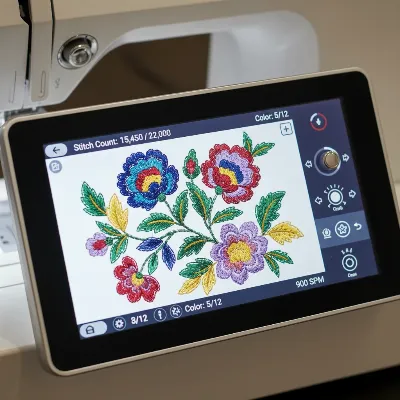 A close-up of a modern sewing and embroidery machine's touchscreen display showing a colorful, intricate floral embroidery design in progress
Tips for Using and Maintaining Your Sewing Machine with Embroidery Features
Proper care and usage are vital to ensure your sewing and embroidery machine remains a reliable tool for years to come. Following these simple tips will help prolong its lifespan and maintain optimal performance.
Regular Cleaning: Lint and thread fibers can accumulate in various parts of the machine, especially around the bobbin case and feed dogs. Use a small brush and a vacuum attachment to gently remove debris after every few projects. This prevents buildup that can lead to tension issues or machine jams.
Oil Your Machine Periodically: Refer to your machine’s manual for specific oiling instructions and recommended frequency. Applying a small drop of high-quality sewing machine oil to designated lubrication points helps keep moving parts running smoothly and quietly. Avoid over-oiling, as this can attract more lint.
Change Needles Frequently: A dull or bent needle can cause skipped stitches, pulled threads, or even damage to your fabric and machine. Change your needle after every 8-10 hours of sewing, or at the start of a new project, especially when switching fabric types. Always use the correct needle type and size for your fabric.
Use Quality Threads and Stabilizers: Inferior threads can break easily, shed excessive lint, and cause tension problems. Invest in good quality embroidery threads (rayon or polyester are common) and appropriate stabilizers for your embroidery projects to ensure smooth stitching and crisp designs. The right stabilizer prevents fabric puckering and movement during the embroidery process.
Proper Storage: When not in use, cover your machine with a dust cover to protect it from dust, debris, and accidental bumps. Store it in a dry, stable environment, away from extreme temperatures or humidity, which can affect electronic components and lubrication.
Troubleshooting Common Issues: Familiarize yourself with your machine’s manual for basic troubleshooting. Many common problems, such as skipped stitches, thread breakage, or uneven tension, can be resolved quickly by rethreading the machine, changing the needle, or adjusting tension settings. Don’t hesitate to consult a certified technician for more complex issues.
Conclusion
Choosing one of the best sewing machines with embroidery features is an investment in your creative passion, offering the power to transform ordinary textiles into personalized works of art. From the versatile Brother SE2000 to the professional Baby Lock Altair 2, these machines provide a blend of advanced technology, user-friendly features, and robust performance to suit every skill level and budget. By carefully considering your needs, understanding key features, and committing to proper maintenance, you can ensure your machine will be a reliable and inspiring partner for countless projects.
Which embroidery feature are you most excited to explore with your next sewing machine?
Frequently Asked Questions
What is the typical lifespan of a sewing machine with embroidery features?
With proper care and maintenance, a high-quality sewing and embroidery machine can last anywhere from 10 to 20 years or even longer. Regular cleaning, oiling, using appropriate needles and threads, and professional servicing contribute significantly to its longevity.
Can I create my own custom embroidery designs?
Yes, most computerized sewing and embroidery machines allow you to import custom designs via a USB port or wireless connectivity. You might need separate digitizing software to convert your artwork or images into a stitch file format that your machine can read.
Is it difficult to learn how to use an embroidery machine?
While some advanced features may take time to master, many entry-level and mid-range embroidery machines are designed with user-friendliness in mind. Features like clear LCD touchscreens, automatic needle threaders, and comprehensive manuals make the learning process accessible for beginners. Start with built-in designs to gain confidence before moving to more complex projects.
Frequently Asked Questions
What is the typical lifespan of a sewing machine with embroidery features?
With proper care and maintenance, a high-quality sewing and embroidery machine can last anywhere from 10 to 20 years or even longer. Regular cleaning, oiling, and using appropriate needles and threads significantly contribute to its longevity.
Can I create my own custom embroidery designs for these machines?
Yes, most computerized sewing and embroidery machines allow you to import custom designs via a USB port or wireless connectivity. You might need separate digitizing software to convert your artwork into a stitch file format that your machine can read.
Is it difficult for a beginner to learn how to use an embroidery machine?
Many entry-level and mid-range embroidery machines are designed with user-friendliness in mind, making the learning process accessible for beginners. Features like clear LCD touchscreens and automatic needle threaders help simplify initial use. Starting with built-in designs is recommended to gain confidence.
What are the most important features to consider when buying an embroidery machine?
Key features include embroidery area (hoop size), the number of built-in designs and fonts, connectivity options (USB, Wi-Fi, Bluetooth), and an LCD touchscreen display. Automatic features like needle threaders and thread cutters also significantly enhance user experience and efficiency.
How do I maintain my sewing machine with embroidery capabilities?
Maintain your machine by regular cleaning to remove lint, periodic oiling according to the manual, and frequent needle changes (every 8-10 hours of sewing). Always use quality threads and stabilizers, and store the machine properly with a dust cover in a dry environment.

This guide was really helpful in narrowing down my choices. I ended up getting a machine similar to the Brother SE2000, and it’s been fantastic for adding custom monograms to towels and shirts. The multi-color design capabilities are impressive, though sometimes getting the thread changes just right takes a bit of practice. Overall, very happy with the upgrade.
As an experienced sewer, I was intrigued by the professional Baby Lock Altair 2. While it’s out of my current budget, it’s great to know what’s out there for advanced users. My current machine, which has similar advanced technology, has truly transformed how I approach custom projects, allowing for incredible precision and efficiency. It’s amazing what these machines can do now.
I was hoping to find something that could handle really intricate designs without a huge learning curve. While my new machine does a decent job with basic embroidery, I’m finding the more complex patterns a bit frustrating to set up. It’s not as user-friendly as I’d hoped, especially for someone who’s not a tech whiz. Still, it’s better than my old basic sewing machine.
I’ve been eyeing a new machine for a while, and the Brother SE2000 really caught my attention. The price point around $1,500 is super reasonable for all the features it packs. I’ve already created some beautiful personalized baby blankets, and the setup was surprisingly easy. Definitely a game-changer for my crafting.