The best sewing machines for making clothes at home in 2026 balance skill level, creative ambitions, and budget, with top models like the Brother CS7000X and Singer Quantum Stylist 9960 offering versatility and precision. A reliable sewing machine is essential for creating your own wardrobe, providing the tools to stitch, create, and wear your masterpieces with confidence. This guide explores mechanical, computerized, heavy-duty, and mini/portable machines, helping you select the ideal model for your garment-making projects.
What is a Sewing Machine?
At its core, a sewing machine is a mechanical or electronic device designed to join fabrics or other materials together with stitches, primarily using thread. It was conceived to drastically reduce the labor-intensive process of hand sewing, revolutionizing textile production and making clothing more accessible. Modern home sewing machines are engineered for individual use, allowing creators to produce everything from simple repairs to intricate garments, home decor, and crafts, typically utilizing a single stitch type at a time.
The concept of a machine that could sew dates back to the late 18th century. Thomas Saint, an English cabinet maker, is widely credited with patenting the first detailed design for a sewing machine in 1790, intended for leather and canvas. However, it was Barthélemy Thimonnier, a French tailor, who developed the first practical and commercially successful sewing machine in 1829. His chain-stitch machine led to the establishment of the world’s first machine-based clothing manufacturing company in 1830, producing uniforms for the French Army. This invention marked a pivotal moment in the Industrial Revolution, significantly boosting efficiency and productivity within the clothing industry and setting the stage for the sophisticated machines we use today.
Types of Sewing Machines for Home Use
Choosing a sewing machine often begins with understanding the different types available, each offering distinct advantages for various sewing needs and skill levels. For making clothes at home, you’ll primarily encounter mechanical, computerized, heavy-duty, and mini/portable models.
Mechanical Sewing Machines
Mechanical sewing machines are the traditional workhorses of the sewing world. They operate with manual dials and levers to control stitch type, length, and width, and speed is typically regulated by foot pedal pressure. These machines are prized for their simplicity, durability, and ease of maintenance.
- Pros: Generally more affordable, robust and reliable, easier to troubleshoot minor issues, excellent for learning basic sewing mechanics, less prone to electronic malfunctions.
- Cons: Limited stitch options, fewer automated features (like automatic needle threading or thread cutting), can be less precise for complex decorative stitches.
- Applications: Ideal for beginners or occasional sewers tackling basic tasks like hemming, repairs, and straightforward garment construction. They teach fundamental sewing skills without the complexities of advanced features.
Computerized Sewing Machines
|
Our Picks for the Best Sewing Machine in 2026
As an Amazon Associate I earn from qualifying purchases.
|
||
| Num | Product | Action |
|---|---|---|
| 1 | SINGER Heavy Duty 4423 Meltwater Blue High Speed Sewing Machine with Accessory Kit | Strong Motor With Enhanced Piercing Power, 97 Stitch Applications, Full Metal frame, 1-step Buttonhole & LED Light |

|
| 2 | Brother FB1757X Mechanical Sewing Machine |
|
| 3 | Brother Sewing and Quilting Machine, XR3774, 37 Built-in Stitches, Wide Table, 8 Included Sewing Feet |
|
| 4 | Janome Cat Fancy Easy-to-Use Sewing Machine with Interior Metal Frame, Bobbin Diagram, Tutorial Videos, Made with Beginners in Mind!, Multi-Color |
|
| 5 | Brother CS7000X Computerized Sewing and Quilting Machine, 70 Built-in Stitches, LCD Display, Wide Table, 10 Included Feet, White |
|
| 6 | Brother SE700 Sewing and Embroidery Machine, Wireless LAN Connected, 135 Built-in Designs, 103 Built-in Stitches, Computerized, 4" x 4" Hoop Area, 3.7" Touchscreen Display, 8 Included Feet, White |
|
| 7 | Brother RLX3817 17-Stitch Sewing Machine, White(Renewed) |
|
| 8 | SINGER Heavy Duty 4452 High-Speed Sewing Machine with Accessory Kit | Strong Motor with Enhanced Piercing Power, 110 Stitch Applications, Full Metal Frame, 1-Step Buttonhole & LED Lights, Grey |
|
| 9 | Brother XM2701 Sewing Machine, Lightweight, Full Featured, 27 Stitches, 6 Included Feet |
|
| 10 | SINGER Heavy Duty 4411 High-Speed Sewing Machine with Accessory Kit | Strong Motor, Enhanced Piercing Power, 69 Stitch Applications, Full Metal Frame, 4-Step Buttonhole & LED Light, Grey |
|
Representing the evolution of sewing technology, computerized machines incorporate electronic circuit boards and often feature LCD or touchscreen displays. They offer a vast array of stitches and automated functions, providing enhanced precision and convenience.
- Pros: Hundreds of built-in stitch options (utility, decorative, stretch, alphanumeric), automatic needle threaders, programmable needle up/down positions, speed control sliders, automatic thread cutters, memory functions for custom stitch sequences, precise stitch adjustments.
- Cons: Higher price point, can have a steeper learning curve for beginners due to numerous features, potentially more costly to repair electronic components.
- Applications: Perfect for intermediate to advanced sewers who desire versatility, precision, and efficiency for complex garment designs, quilting, and detailed embellishments.
Heavy-Duty Sewing Machines
Designed to power through thicker fabrics and multiple layers, heavy-duty sewing machines are built with stronger motors and sturdy metal frames. While some can be mechanical, many modern heavy-duty machines integrate computerized features for added convenience.
- Pros: Superior piercing power for materials like denim, canvas, upholstery fabric, and even leather; high-speed stitching capabilities; enhanced durability and stability.
- Cons: Can be louder and heavier than standard machines; may have fewer decorative stitch options if purely mechanical; potentially more expensive.
- Applications: Essential for sewers regularly working with robust materials, creating structured garments like coats and jeans, or undertaking home decor projects that demand extra strength and endurance.
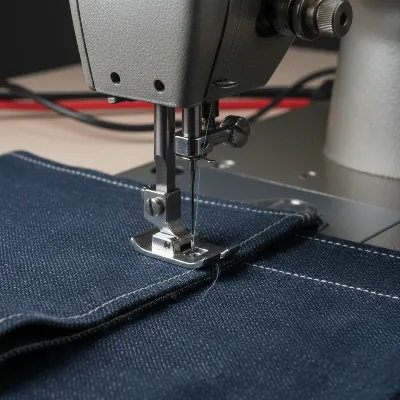 A heavy-duty sewing machine powerfully stitching through multiple layers of thick denim fabric with precision.
Mini/Portable Sewing Machines
Mini or portable sewing machines are characterized by their compact size and lightweight design, making them easy to transport and store. These can range from very basic, battery-operated handheld devices to small, full-featured machines.
- Pros: Highly portable for classes or small spaces, easy to set up and store, often very affordable for basic models.
- Cons: Limited power for thick fabrics, fewer features and stitch options, may lack the stability for intricate or prolonged sewing sessions.
- Applications: Great for beginners, occasional mending, quick fixes, or small, simple projects. They are also suitable for travelers or those with very limited dedicated sewing space.
Comparing Popular Home Sewing Machines for Garment Making
When selecting the best sewing machine for making clothes at home, several models consistently receive high praise for their performance, features, and durability. Here’s a comparison of some top contenders in 2026, offering a snapshot to help you narrow down your choices.
| Machine Model | Price Range | Notable Features | Durability | Suitable Applications |
|---|---|---|---|---|
| Brother CS7000X | Mid-range | 70 stitches, auto needle threader, wide table, speed control | Good | Beginners/Intermediate, garment construction, quilting, alterations |
| Singer Heavy Duty 4452 | Entry-Mid | 32 stitches, 1100 SPM, heavy-duty motor, stainless steel bed plate | Excellent (HD) | Heavy fabrics, denim, high-speed projects, basic garment making |
| Janome HD3000 | Mid-High | Heavy-duty metal frame, powerful motor, adjustable presser foot pressure | Superior (HD) | Thick fabrics, daily garment work, precision stitching |
| Singer Quantum Stylist 9960 | Mid-High | 600 stitches, 5 fonts, 13 buttonholes, auto thread cutter, LCD | Very Good | Advanced garment making, decorative stitching, monogramming, quilting |
| Brother XR9550 | Mid-range | 165 stitches, LCD, auto needle threader, 8 presser feet, wide table | Good | Beginners/Intermediate, versatile garment projects, quilting |
| Juki HZL-F300 | High-end | Industrial-quality feed system, 106 stitches, 16 buttonholes, thread cutter | Excellent (Pro-grade) | Professional garment sewing, stitch quality, tricky fabrics, heavy-duty |
“For anyone serious about making their own clothes, the ability to handle various fabrics—from delicate silk to robust denim—is paramount. A machine with adjustable presser foot pressure and a versatile stitch library can make all the difference in achieving professional-looking results.” – Lan, Experienced Sewing Technician
How to Choose the Right Sewing Machine for You (Buying Guide)
Selecting a sewing machine is a personal decision, much like choosing a creative partner. Consider these factors to ensure your new machine perfectly aligns with your aspirations and needs.
Define Your Sewing Needs
Before diving into features, reflect on what you truly need the machine for. Are you primarily looking to mend clothes and hem trousers? Or do you dream of constructing elaborate dresses, tailored jackets, or intricate cosplay costumes? The complexity and frequency of your projects will dictate the type of machine you need. If garment making is your passion, you’ll want features that support diverse fabrics, accurate seams, and various finishing techniques.
Set Your Budget
Sewing machines vary significantly in price, from under $200 for basic mechanical models to several thousand for high-end computerized and industrial-grade domestic machines. Determine a realistic budget, but also consider it an investment. A slightly more expensive machine with better durability and features might save you money and frustration in the long run. Affordable options often excel for beginners, while intermediate and advanced sewers may benefit from a mid-range or higher-end model that grows with their skills.
Essential Features to Look For
Certain features are game-changers, especially for garment making:
- Variety of Stitches: Beyond straight and zigzag, look for stretch stitches (for knits), decorative stitches, and at least a one-step buttonhole function.
- Automatic Needle Threader: A real time-saver and eye-strain reducer, especially for frequent threading.
- Free Arm: A removable part of the sewing bed that allows you to easily sew cuffs, sleeves, and pant hems.
- Adjustable Stitch Length and Width: Crucial for customizing stitches for different fabric types and desired aesthetics.
- Speed Control: A slider that lets you set the maximum sewing speed, incredibly helpful for beginners or detailed work.
- Adjustable Presser Foot Pressure: Allows you to fine-tune how much pressure the foot applies to the fabric, essential for handling both delicate and thick materials without puckering or slipping.
- Top-Loading/Drop-in Bobbin: Generally easier to access and monitor thread supply compared to front-loading systems.
Reputable Brands
Stick with established brands known for their reliability, customer support, and quality engineering. Brands like Brother, Singer, Janome, and Juki are consistently recommended across various price points and skill levels. Bernina and Baby Lock also offer premium options, especially for serious sewists. Researching brand reputation ensures you’re investing in a machine that’s built to last and supported by a good network.
Reviews and Personal Testing
Always read reviews from other users and experts, particularly focusing on experiences with garment making. If possible, test out a few machines at a local dealer. Feel the controls, listen to the motor, and try sewing different fabric swatches. This hands-on experience can be invaluable in finding a machine that feels intuitive and comfortable for you.
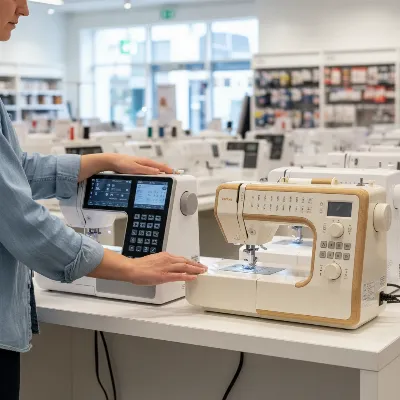 A person thoughtfully considering various sewing machine models in a modern, well-lit store, focusing on features and design.
Key Features of a Great Home Sewing Machine
Beyond the basics, certain features significantly enhance the garment-making experience, making your projects more enjoyable and yielding professional results.
- Extensive Stitch Variety: While straight and zigzag stitches are fundamental, a machine with a wider range of utility stitches (like overcast, blind hem, stretch stitches) and decorative options unlocks creative potential. Multiple buttonhole styles are also a huge plus for clothing.
- One-Step Buttonhole Function: Instead of multiple steps, a one-step buttonhole automatically creates a perfect buttonhole to the size of your button, ensuring consistent and professional finishes on garments.
- Precise Speed Control: A dedicated speed control slider or a start/stop button allows for meticulous control, especially when navigating curves, corners, or working with slippery fabrics.
- Integrated Needle Threader: An automatic needle threader simplifies the most tedious part of setting up, saving time and preventing eye strain.
- Easy Bobbin System: A top-loading, drop-in bobbin with a clear cover makes it easy to install and monitor your bobbin thread, preventing unexpected run-outs mid-seam.
- LED Lighting: Bright, shadow-free LED illumination over the needle area significantly improves visibility, reducing eye fatigue and enhancing accuracy.
- Adjustable Presser Foot Pressure: This critical feature allows you to decrease pressure for delicate fabrics like silk or chiffon, preventing stretching and puckering, and increase it for thick layers, ensuring smooth feeding.
- Free Arm Capability: Indispensable for sewing cylindrical items such as sleeves, pant legs, and small openings with ease.
- Needle Up/Down Position: A convenient feature that allows the needle to stop in either the up or down position, perfect for pivoting fabric without losing your stitch or for easy fabric removal.
Tips for Using and Maintaining Your Sewing Machine
A sewing machine is an investment that, with proper care, can last for decades. Regular use and maintenance are key to its longevity and consistent performance.
- Clean Regularly: Lint and dust are a sewing machine’s worst enemies. After every few hours of use, or after each major project, unplug your machine and use a small brush to remove lint from the bobbin area, under the needle plate, and around the feed dogs. Accumulated lint can lead to skipped stitches, tension issues, and even motor problems.
- Oil the Machine (If Required): Many mechanical machines and some computerized models require periodic oiling. Always refer to your machine’s manual for specific oiling points and frequency. Use only high-quality sewing machine oil, as household oils can gum up the delicate mechanisms. Some modern machines are self-lubricating and do not require oiling.
- Replace Needles Frequently: A dull or bent needle can cause skipped stitches, pulled threads, and fabric damage. Change your needle after every 8-10 hours of sewing or at the start of a new project. Always use the correct needle type and size for your fabric and thread.
- Check and Replace Bobbins: Inspect your bobbins for any damage or lint buildup, which can affect stitch quality. Ensure they are inserted correctly according to your machine’s specifications.
- Store Properly: When not in use, cover your sewing machine with a dust cover to protect it from dust, pet hair, and accidental bumps. Store it in a dry, stable environment.
- Professional Servicing: Even with diligent home maintenance, a sewing machine benefits from professional servicing every one to three years, depending on usage. A technician can clean internal components, lubricate hard-to-reach parts, and make necessary adjustments to keep your machine running optimally.
Conclusion
Choosing the best sewing machine for making clothes at home means finding a harmonious balance between your skill level, creative ambitions, and budget. Whether you opt for the robust simplicity of a mechanical model or the advanced precision of a computerized one, the right machine will empower you to transform fabric into fashionable realities. By considering essential features like stitch variety, ease of use, and durability, and committing to regular maintenance, your sewing machine will serve as a reliable partner in your creative journey for years to come. So, what exciting garment will you embark on creating first with your perfect new machine?
Frequently Asked Questions
What makes a sewing machine “heavy-duty” and is it necessary for home clothing?
A heavy-duty sewing machine features a stronger motor and a metal frame, allowing it to penetrate multiple layers of thick fabrics like denim or canvas with ease. While not strictly necessary for all home clothing projects, it’s highly recommended if you plan to work with heavier materials frequently, ensuring durability and preventing skipped stitches.
Can a beginner use a computerized sewing machine, or is mechanical better?
Beginners can definitely use computerized sewing machines, especially models designed with user-friendly interfaces and speed control features. However, some experts suggest starting with a mechanical machine to grasp fundamental sewing mechanics without being overwhelmed by advanced functions.
How often should I replace my sewing machine needle?
It’s generally recommended to replace your sewing machine needle after every 8-10 hours of sewing time, or at the start of a new project. A fresh needle prevents skipped stitches, fabric snags, and ensures optimal stitch quality.
What are the most important features for making clothes that I should prioritize?
For making clothes, prioritize features such as a variety of utility and stretch stitches, a reliable buttonhole function (preferably one-step), a free arm for sleeves and cuffs, adjustable stitch length and width, and adjustable presser foot pressure to handle diverse fabrics.
Is it worth investing in a more expensive sewing machine for home use?
Investing in a higher-priced sewing machine can be worthwhile if you sew frequently, work with diverse or challenging fabrics, or desire advanced features for professional-looking results. More expensive models often offer greater durability, precision, and a wider range of capabilities that can grow with your skills.
How to Choose the Right Sewing Machine for Garment Making
Selecting the perfect sewing machine for making clothes at home involves defining your needs, setting a budget, and evaluating essential features and reputable brands.
Before looking at machines, determine the complexity and frequency of your projects. Consider if you'll be doing simple mending or constructing elaborate dresses and tailored jackets. Your specific garment-making aspirations will guide the type of machine and features you need.
Sewing machine prices range from under $200 for basic mechanical models to several thousand for high-end computerized machines. Establish a realistic budget, viewing it as an investment. A slightly more expensive machine with better durability and features can save frustration and money in the long run.
Prioritize features crucial for garment making, such as a variety of stitches (including stretch and one-step buttonholes), an automatic needle threader, a free arm, adjustable stitch length/width, speed control, adjustable presser foot pressure, and a top-loading bobbin. These enhance precision and ease of use for diverse fabrics.
Stick with established brands known for reliability and customer support, such as Brother, Singer, Janome, and Juki. For premium options, consider Bernina and Baby Lock. Researching brand reputation ensures you invest in a durable machine supported by a good network.
Always read user and expert reviews, focusing on garment-making experiences. If possible, test machines at a local dealer to feel the controls and sew fabric swatches. This hands-on experience is invaluable for finding a machine that feels intuitive and comfortable for you.

I picked up a mini/portable machine hoping to save some space, and while it’s okay for really simple projects, I found it struggled a bit with thicker seams on a pair of pants I was trying to make. It’s fine for quick fixes or very light fabrics, but if you’re planning on anything more substantial, you might want to consider a more robust model. The portability is nice though.
I’ve been using the Brother CS7000X for a few months now, and it’s been fantastic for making my own dresses and skirts. The variety of stitches is perfect for different fabrics, and it handles everything from delicate silks to sturdy denims without a hitch. It’s definitely a great choice for anyone serious about garment making at home.
As someone who loves creating my own wardrobe, a heavy-duty machine was a must for me. I’ve been using one for all my garment-making, and it powers through multiple layers of fabric like it’s nothing. It’s so reliable and makes the whole process much more enjoyable, knowing my machine can handle whatever I throw at it.
The Singer Quantum Stylist 9960 was a bit of an investment, but it’s totally worth it for the precision and speed. I’ve been able to tackle so many different clothing projects, from intricate blouses to tailored jackets, and the results always look professional. The automatic needle threader is a lifesaver, especially when I’m in a hurry.