A heavy-duty sewing machine is essential for tackling tough fabrics like denim and leather, preventing skipped stitches and broken needles common with standard machines. These specialized machines feature enhanced internal components and powerful motors, allowing them to stitch through dense materials such as denim, canvas, upholstery fabric, and various types of leather with ease and precision. This guide will help you select the perfect heavy-duty sewing machine, understand its crucial features, and maintain it for reliable performance.
What is a Heavy Duty Sewing Machine?
A heavy-duty sewing machine is specifically engineered to handle materials that would overwhelm a conventional domestic machine. Unlike standard models, these machines boast enhanced internal components and powerful motors, allowing them to stitch through dense fabrics such as denim, canvas, upholstery fabric, and various types of leather without faltering. Historically, early sewing machines were primarily mechanical and built with robust metal parts, laying the groundwork for the powerful, specialized machines we see today. The evolution has led to machines that combine raw power with precision, specifically adapted for challenging textiles.
The defining characteristics of a heavy-duty sewing machine include a stronger motor that provides superior piercing power, even at lower speeds, and robust feeding systems designed to move bulky material stacks evenly. They also feature a high presser-foot lift, adjustable foot pressure, and compatibility with larger needles and industrial-grade threads, all housed within a durable metal internal frame. These features enable them to withstand longer duty cycles and maintain consistent stitch quality through challenging projects.
Types of Heavy Duty Sewing Machines
When exploring heavy-duty sewing machines, you’ll encounter a spectrum of options, each tailored for different user needs and project scales. Understanding these distinctions is crucial for making an informed decision.
Domestic Heavy Duty Sewing Machines
These machines are the entry point into heavy-duty sewing for home users. They are designed to be more powerful and durable than standard domestic models, making them suitable for occasional heavy-duty tasks without requiring a dedicated industrial setup.
- Advantages:
- Versatility: Capable of handling both light and medium-to-heavy fabrics.
- Portability: Generally lighter and more compact than industrial machines, making them suitable for home workshops or moving between spaces.
- User-Friendly: Often come with a variety of stitches (utility, decorative, buttonholes) and features that cater to hobbyists and home sewers.
- Affordability: Typically the most budget-friendly option among heavy-duty machines.
- Disadvantages:
- Limited Power: While stronger than basic machines, they may still struggle with extremely thick or multiple layers of very tough materials over extended periods.
- Durability: May have more plastic components compared to industrial models, potentially reducing their lifespan under constant heavy use.
- Applications: Ideal for home DIY projects, light canvas work, denim alterations, mending upholstery, and creating bags from medium-weight leather or vinyl. Popular examples include the Singer Heavy Duty 4452 and Janome HD3000.
Semi-Industrial/Professional Sewing Machines
|
Our Picks for the Best Sewing Machine in 2026
As an Amazon Associate I earn from qualifying purchases.
|
||
| Num | Product | Action |
|---|---|---|
| 1 | SINGER Heavy Duty 4423 Meltwater Blue High Speed Sewing Machine with Accessory Kit | Strong Motor With Enhanced Piercing Power, 97 Stitch Applications, Full Metal frame, 1-step Buttonhole & LED Light |

|
| 2 | Brother FB1757X Mechanical Sewing Machine |
|
| 3 | Brother Sewing and Quilting Machine, XR3774, 37 Built-in Stitches, Wide Table, 8 Included Sewing Feet |
|
| 4 | Janome Cat Fancy Easy-to-Use Sewing Machine with Interior Metal Frame, Bobbin Diagram, Tutorial Videos, Made with Beginners in Mind!, Multi-Color |
|
| 5 | SINGER Heavy Duty 4411 High-Speed Sewing Machine with Accessory Kit | Strong Motor, Enhanced Piercing Power, 69 Stitch Applications, Full Metal Frame, 4-Step Buttonhole & LED Light, Grey |
|
| 6 | Brother SE700 Sewing and Embroidery Machine, Wireless LAN Connected, 135 Built-in Designs, 103 Built-in Stitches, Computerized, 4" x 4" Hoop Area, 3.7" Touchscreen Display, 8 Included Feet, White |
|
| 7 | Brother CS7000X Computerized Sewing and Quilting Machine, 70 Built-in Stitches, LCD Display, Wide Table, 10 Included Feet, White |
|
| 8 | Brother RLX3817 17-Stitch Sewing Machine, White(Renewed) |
|
| 9 | SINGER Heavy Duty 4452 High-Speed Sewing Machine with Accessory Kit | Strong Motor with Enhanced Piercing Power, 110 Stitch Applications, Full Metal Frame, 1-Step Buttonhole & LED Lights, Grey |
|
| 10 | Brother XM2701 Sewing Machine, Lightweight, Full Featured, 27 Stitches, 6 Included Feet |
|
Bridging the gap between domestic and full industrial machines, semi-industrial models offer enhanced power and durability in a more manageable size. These are often straight-stitch only machines, providing exceptional speed and precision for specific tasks.
- Advantages:
- Increased Power and Speed: Feature high-torque motors capable of faster stitches per minute, nearing industrial capabilities.
- Precision: Stable needle bars ensure consistent, straight stitches, crucial for professional finishes on thick materials.
- Durability: Built with more metal components, offering greater longevity than most domestic heavy-duty machines.
- Space-Efficient: While more substantial than domestic machines, they are typically standalone units without the massive built-in tables of full industrial models, making them suitable for smaller professional studios or serious home sewers.
- Disadvantages:
- Limited Stitch Options: Often restricted to straight stitches, lacking decorative or zigzag capabilities.
- Higher Cost: A significant investment compared to domestic heavy-duty machines.
- Applications: Perfect for advanced sewists, small businesses, and professional bag makers who require high-speed precision for projects like denim hemming, marine canvas, leather accessories, and tailored garments. Examples include the Juki TL-2010Q and Janome HD9.
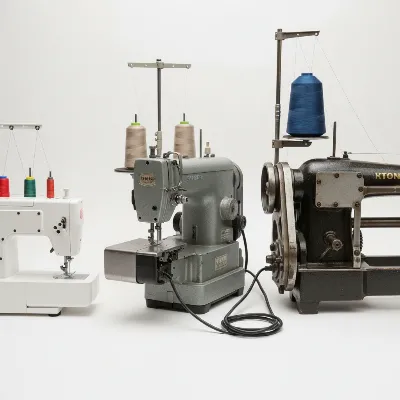 A close-up shot of various sewing machine types from domestic to industrial, highlighting their design differences and varying sizes
Industrial Heavy Duty Sewing Machines
These are the workhorses of the sewing world, built for continuous, high-volume production in commercial settings. Industrial machines are designed for singular purposes, delivering unmatched power, speed, and durability for specialized tasks.
- Advantages:
- Maximum Power and Speed: Equipped with robust motors and heavy-duty mechanisms, they can stitch through virtually any thick material with incredible speed and consistency.
- Exceptional Durability: Constructed almost entirely from metal, these machines are built to last decades under rigorous daily use.
- Specialized Functionality: Often designed for specific tasks (e.g., straight stitch, buttonhole, overlock), optimizing performance for that function.
- Consistent Stitch Quality: Maintain flawless stitch formation at high speeds, critical for professional-grade production.
- Long Duty Cycles: Can operate for hours on end without overheating or needing breaks.
- Disadvantages:
- High Cost: The most expensive option, often requiring a substantial upfront investment.
- Large Footprint: Typically come with a dedicated table and motor, requiring a significant amount of space.
- Limited Versatility: Most are straight-stitch only, making them unsuitable for projects requiring varied stitch types.
- Portability: Essentially non-portable once set up.
- Applications: Essential for alterations shops, upholstery businesses, leather goods manufacturing, marine canvas production, and any high-volume textile industry. Examples include the Jack heavy variant plainsewer, Mirsew 1541, Juki 2810, and Consew 206RB-5.
Comparison Table of Heavy Duty Sewing Machines
| Type of Machine | Price Range (USD) | Key Features | Durability | Best Application |
|---|---|---|---|---|
| Domestic Heavy Duty | $200 – $800 | Strong motor, varied stitches, sometimes includes walking foot, portable | Good, mostly metal frame | Home DIY, light upholstery, denim mending, small craft projects |
| Semi-Industrial | $800 – $2,500 | High-speed straight stitch, powerful motor, stable needle bar, larger harp space | Excellent, all-metal | Professional bag making, advanced denim work, marine canvas, serious hobbyists |
| Industrial Heavy Duty | $1,500 – $5,000+ | Extreme power, high speed, specialized functions (e.g., walking foot), built-in table | Outstanding, all-metal | High-volume production, heavy leatherwork, commercial upholstery, alterations shops |
How to Choose the Right Heavy Duty Sewing Machine (Buying Guide)
Selecting the ideal heavy-duty sewing machine involves careful consideration of your specific needs, budget, and desired features. It’s an investment that should align with your sewing aspirations.
Assess Your Sewing Needs
Begin by clearly defining what you intend to sew. Are you planning to mend jeans occasionally, or do you envision regular production of thick leather bags? The type of projects (e.g., apparel, accessories, home decor, upholstery) and the frequency of use will dictate the level of power, features, and durability you require. For example, a machine for occasional heavy sewing at home differs significantly from one needed for daily, high-volume denim alterations.
Set Your Budget
Heavy-duty sewing machines vary widely in price, from a few hundred dollars for domestic models to several thousands for industrial powerhouses. Establish a realistic budget that reflects your commitment to heavy-duty sewing. Remember that while a higher price often correlates with increased power and longevity, there are excellent value options at every level.
Essential Features to Prioritize
When examining various models, certain features are non-negotiable for effective heavy-duty sewing:
- Powerful Motor: A strong motor is paramount for piercing through dense layers without stalling. Look for machines with high wattage or those explicitly marketed for their piercing power at low speeds.
- Advanced Feeding System (Walking Foot): This is perhaps the most critical feature for thick fabrics. A walking foot ensures that all layers of fabric are fed evenly under the needle, preventing shifting, puckering, and skipped stitches. Industrial machines may feature compound walking feet for even heavier materials.
- High Presser Foot Lift and Adjustable Pressure: A high lift allows you to easily place multiple thick layers under the foot. Adjustable presser foot pressure ensures the fabric is held firmly but not so tightly that it creates drag or marks delicate materials.
- Needle and Thread Compatibility: Your machine must accommodate larger, heavy-duty needles (e.g., denim needles, leather needles in sizes 90/14 to 110/18 or even 135×16/17 for industrial machines) and thicker, stronger threads like bonded nylon or heavy-duty polyester.
- Robust Metal Frame: A metal internal frame minimizes vibration, enhances stability, and contributes significantly to the machine’s overall durability and longevity.
- Generous Throat Space: The area to the right of the needle (the throat) should be ample enough to maneuver bulky projects like large bags, coats, or upholstery without feeling cramped.
Reputable Brands
Focus on brands known for their heavy-duty offerings and reliability. Brands like Singer, Janome, Juki, and Consew consistently receive high praise in the heavy-duty sewing community. Researching their specific heavy-duty lines will yield excellent options.
Read Reviews and Compare Models
Before making a final decision, dedicate time to reading independent reviews and comparing specific models. Pay attention to feedback regarding a machine’s performance on denim and leather, its ease of use, and any reported durability issues. Look for real-world testaments to how machines handle various layers and material types.
Where to Buy
Purchase your heavy-duty sewing machine from reputable sources. This could be an authorized dealer, a specialized sewing machine store, or a trusted online retailer. Buying from established vendors often provides access to better customer support, warranty services, and potentially maintenance advice.
Key Features of Heavy Duty Sewing Machines
To truly excel with denim and leather, a sewing machine needs specific attributes that go beyond what standard models offer. These features are the backbone of a reliable heavy-duty machine.
- Powerful Motor: A stronger motor is the heart of a heavy-duty machine, providing the necessary torque to consistently drive the needle through multiple dense layers without straining or slowing down. This power is crucial for maintaining consistent stitch quality.
- Robust Metal Frame: The internal frame being made of metal is a non-negotiable for heavy-duty use. It provides essential stability, reduces vibration during operation, and contributes significantly to the machine’s overall durability, ensuring it can withstand years of demanding projects.
- Advanced Feeding Systems:
- Walking Foot: An integrated or attachable walking foot is critical. It has its own set of feed dogs that grip the top layer of fabric, moving it in perfect sync with the machine’s lower feed dogs. This prevents uneven feeding, shifting, and puckering, which are common issues when sewing thick or slippery materials.
- Compound Feed: Found in industrial machines, a compound feed system involves the needle, presser foot, and feed dogs moving together, offering superior material handling for extremely thick and heavy materials like multi-layered leather or marine canvas.
- High Presser Foot Lift and Adjustable Pressure: A generous presser foot lift allows for ample space to slide bulky projects under the needle. Adjustable presser foot pressure lets you fine-tune how firmly the foot grips the fabric, essential for preventing marks on delicate leathers while ensuring secure feeding on thick denim.
- Needle and Thread Compatibility: Heavy-duty machines are designed to accommodate larger needle sizes (e.g., size 16 or 18 denim/leather needles) and stronger threads (like V92 or V138 bonded nylon/polyester). This compatibility is vital for preventing needle breakage and achieving durable seams on tough materials.
- Adjustable Stitch Length and Speed Control: The ability to lengthen stitches (typically 3-4mm or more for thick materials) is important to prevent material perforation and achieve better aesthetics on heavy fabrics. Speed control allows for precise, slow stitching when navigating intricate details on leather or thick seams, then speeding up on straightaways.
- Generous Throat Space: A larger workspace to the right of the needle is incredibly beneficial for maneuvering large projects like coats, bags, or upholstery without constant struggle, improving both ease of use and final project quality.
Tips for Using and Maintaining Your Heavy Duty Sewing Machine
Proper use and regular maintenance are paramount to ensuring your heavy-duty sewing machine performs optimally and lasts for many years. Neglecting these aspects can lead to skipped stitches, broken needles, and costly repairs.
- Regular Cleaning: Lint and thread fragments accumulate quickly, especially when working with fibrous materials like denim or the underside of leather. Make it a habit to clean the bobbin area, under the throat plate, and around the feed dogs after every few hours of use. Use a small brush and specialized cleaning tools to remove debris, and wipe down the machine’s body with a soft, damp cloth. Always unplug the machine before cleaning.
- Appropriate Oiling: Just like any precision machinery, your sewing machine needs lubrication. Refer to your machine’s manual for specific oiling points and frequency. Generally, industrial machines may need oiling every 7-8 hours of use, while domestic models might require it weekly or monthly, depending on usage. Only use sewing machine oil, as other oils can gum up internal parts. Apply sparingly and run the machine briefly to distribute the oil.
- Changing Needles and Thread Correctly: A dull or bent needle is a primary cause of skipped stitches and fabric damage. Change your needle after every 8-10 hours of sewing time, or sooner if you hear a popping sound or notice resistance. Always use the correct needle type and size for your fabric (denim needles for denim, leather needles for leather). Similarly, select a high-quality, strong thread suitable for heavy materials to ensure durable seams.
- Proper Storage: When not in use, cover your sewing machine to protect it from dust and environmental debris. Store it in a dry, stable environment to prevent rust or damage from humidity. For industrial machines, ensure the workspace is kept clean.
- Troubleshooting Common Issues: Familiarize yourself with basic troubleshooting steps outlined in your machine’s manual. Many common issues, such as skipped stitches or tangled thread, can often be resolved by changing the needle, rethreading the machine, or adjusting tension settings. Learning these basics can save you time and prevent unnecessary service calls.
“A well-maintained heavy-duty sewing machine is not just a tool; it’s a reliable partner that empowers you to bring even your most ambitious denim and leather projects to life with confidence and precision.” – Lan Nguyen, Sewing Technician
Conclusion
Investing in a heavy-duty sewing machine is a transformative step for anyone passionate about working with tough materials like denim and leather. By understanding the distinctions between domestic, semi-industrial, and industrial models, recognizing the essential features like powerful motors and advanced feeding systems, and committing to regular maintenance, you can choose a machine that perfectly matches your creative needs. With the right heavy-duty sewing machine, you’ll no longer be limited by your tools, but rather empowered to tackle any thick fabric project with professional-grade results. What incredible denim or leather creations will you embark on next?
Frequently Asked Questions
What makes a sewing machine “heavy-duty” for denim and leather?
A heavy-duty sewing machine for denim and leather typically features a more powerful motor for superior piercing capability, a robust metal internal frame for stability, and specialized feeding systems like a walking foot to move thick layers evenly. It also accommodates larger needles and stronger threads.
Can I sew leather with a regular domestic sewing machine?
While a regular domestic sewing machine might handle very thin, soft leather or faux leather in single layers, it will struggle with thicker hides, multiple layers, or dense denim. Using an unsuitable machine can lead to skipped stitches, broken needles, damage to the machine, and poor stitch quality.
What is a walking foot, and why is it important for heavy fabrics?
A walking foot is a presser foot attachment (or integrated feature) with its own set of feed dogs. It moves in conjunction with the machine’s lower feed dogs, gripping the top layer of fabric and feeding it evenly. This prevents layers from shifting, puckering, or slipping, which is crucial for consistent stitching on thick, bulky, or slippery materials like denim, leather, and vinyl.
How often should I oil my heavy-duty sewing machine?
The frequency of oiling depends on your machine type and usage. Industrial heavy-duty machines often require oiling every 7-8 hours of use, while domestic heavy-duty models might need it weekly or monthly. Always consult your machine’s manual for specific recommendations and use only approved sewing machine oil.
What kind of needles and thread should I use for denim and leather?
For denim, use “denim” or “jeans” needles, typically sizes 90/14 to 110/18, known for their sharp, strong points. For leather, use “leather” needles, which have a wedge-shaped point designed to cut through leather rather than pierce it, preventing damage. For both, use strong, durable threads like bonded nylon or heavy-duty polyester, often found in V69, V92, or V138 weights.
Is an industrial sewing machine always better than a domestic heavy-duty one?
Not necessarily. While industrial machines offer unparalleled power, speed, and durability for high-volume, specialized tasks, they are often straight-stitch only, expensive, and require significant space. A high-quality domestic heavy-duty or semi-industrial machine can be more versatile, user-friendly, and cost-effective for home sewers or small businesses with varied projects.
How can I make my heavy-duty machine last longer?
Beyond regular cleaning and oiling, ensure you always use the correct needles and thread for your material, avoid forcing fabric through the machine, and address any issues promptly. Storing your machine properly when not in use and consulting your manual for maintenance specifics will also significantly extend its lifespan.
How to Choose the Right Heavy Duty Sewing Machine
Selecting the ideal heavy-duty sewing machine involves careful consideration of your specific needs, budget, and desired features to ensure it aligns with your sewing aspirations.
Clearly define what you intend to sew. Consider the types of projects (e.g., apparel, accessories, upholstery) and the frequency of use to determine the required power, features, and durability. A machine for occasional home use differs from one needed for daily, high-volume alterations.
Establish a realistic budget, as heavy-duty sewing machines range from $200 for domestic models to over $5,000 for industrial powerhouses. While higher prices often correlate with increased power and longevity, excellent value options exist at every level.
Focus on non-negotiable features like a powerful motor, an advanced feeding system (walking foot), high presser foot lift with adjustable pressure, and compatibility with larger needles and stronger threads. A robust metal frame and generous throat space are also crucial for durability and ease of use.
Focus on reputable brands known for heavy-duty offerings, such as Singer, Janome, Juki, and Consew. Read independent reviews to compare specific models, paying attention to performance on denim and leather, ease of use, and reported durability issues to find real-world testaments.
Buy your heavy-duty sewing machine from authorized dealers, specialized sewing machine stores, or trusted online retailers. Established vendors often provide better customer support, warranty services, and valuable maintenance advice, ensuring a reliable purchase.

I’ve been looking for a machine that can handle upholstery fabric without jamming, and the tips here about reinforced internal components were super helpful. I ended up getting a model with a strong metal frame, and it’s been fantastic. The stitches are so much more consistent now, even on thicker materials. Definitely worth the upgrade.
I finally invested in a heavy-duty machine after years of struggling with my old one on denim projects. This guide really helped me understand the difference in motor power and why it matters. My new machine glides through multiple layers of jeans like butter, no more broken needles! It’s a game-changer for my upcycling projects.
This guide was exactly what I needed to choose my first heavy-duty sewing machine. I was worried about tackling canvas for some outdoor cushions, but understanding the importance of a powerful motor made all the difference. My new machine handles it effortlessly, and I’m so happy with the results. Highly recommend doing your research like this!
I bought a heavy-duty machine specifically for leather, and while it does a decent job, I’m still getting some skipped stitches on really thick pieces. I followed the advice on needle types, but it’s not perfect. Maybe I need to adjust the tension more, but it’s a bit frustrating when working with expensive leather.