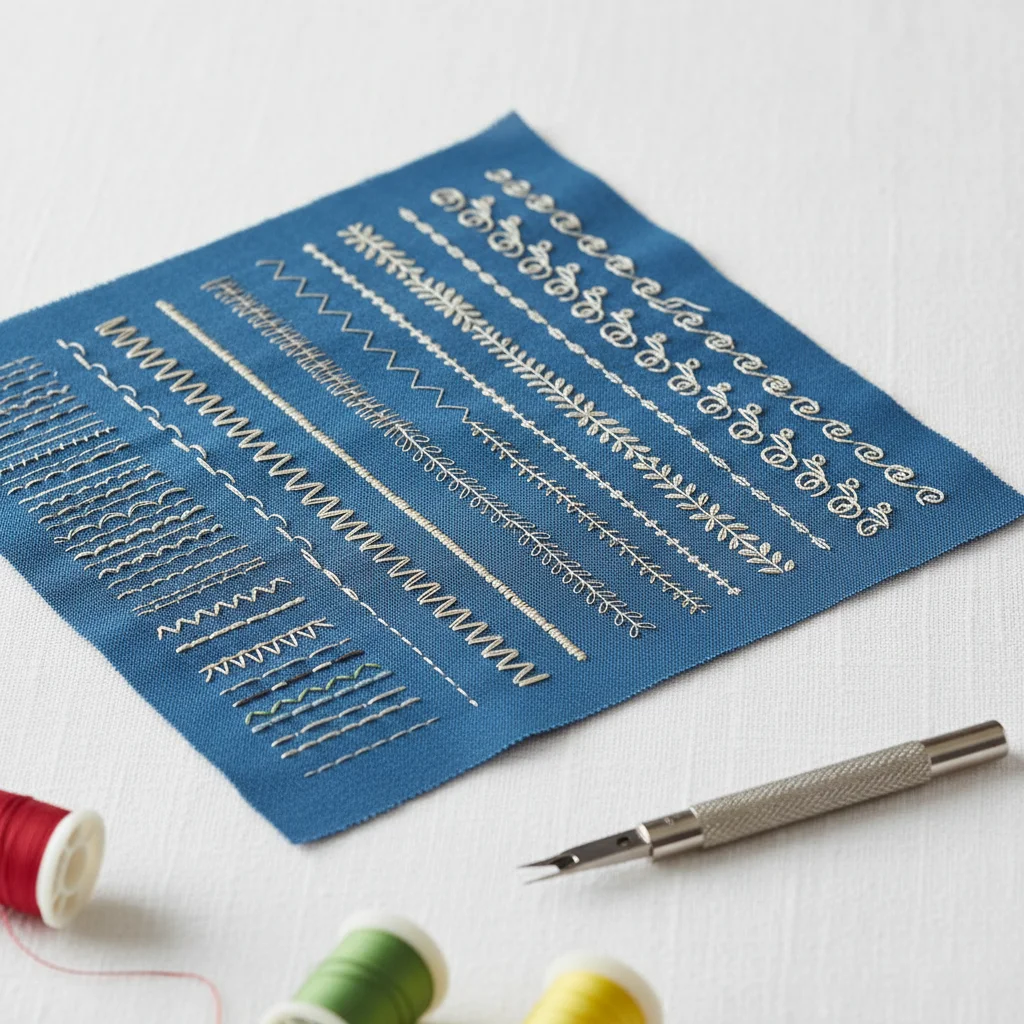
Understanding the various types of sewing machine stitches is fundamental to achieving professional-looking results in your projects. There are typically over 10 common stitch types available on most modern sewing machines, each designed for a specific purpose, from basic construction to decorative embellishments. Mastering these stitches will significantly expand your creative possibilities and improve the durability and finish of your garments and crafts.
The Essential Straight Stitch and Zigzag Stitch
The straight stitch is the workhorse of any sewing machine, used for almost all basic construction, seaming, and topstitching. It creates a strong, linear seam and is adjustable in length to suit different fabric weights and project requirements. For instance, a longer stitch length is ideal for basting, while a shorter length provides greater security for permanent seams. The zigzag stitch, on the other hand, is incredibly versatile. It’s primarily used for finishing raw edges to prevent fraying, attaching elastic, and creating decorative effects. Its width and length can be adjusted, making it suitable for anything from a narrow overcasting stitch to a wide, open decorative pattern.
Utility Stitches for Strength and Flexibility
Beyond the basics, utility stitches offer enhanced strength and flexibility. The triple straight stitch, also known as a stretch stitch, is a robust option that sews each stitch three times, creating a very strong and slightly elastic seam perfect for high-stress areas or knit fabrics. Similarly, the triple zigzag stitch provides a strong, flexible finish for stretch fabrics, preventing popped seams. Another crucial utility stitch is the blind hem stitch, designed to create an almost invisible hem on garments. This stitch catches only a few threads from the main fabric, making it ideal for professional-looking finishes on skirts, trousers, and curtains.
- Overcast Stitch: Prevents fabric edges from fraying, similar to a serger.
- Buttonhole Stitch: Creates perfectly sized and finished buttonholes automatically.
- Stretch Stitch: Accommodates fabric movement, ideal for knits and activewear.
- Satin Stitch: A dense zigzag used for appliqué and decorative fills.
- Quilting Stitch: Often a small, even straight stitch for piecing and quilting layers.
Decorative Stitches for Embellishment
|
Our Picks for the Best Sewing Machine in 2026
As an Amazon Associate I earn from qualifying purchases.
|
||
| Num | Product | Action |
|---|---|---|
| 1 | Brother Sewing and Quilting Machine, XR3774, 37 Built-in Stitches, Wide Table, 8 Included Sewing Feet |

|
| 2 | Brother RLX3817 17-Stitch Sewing Machine, White(Renewed) |
|
| 3 | Brother XM2701 Sewing Machine, Lightweight, Full Featured, 27 Stitches, 6 Included Feet |
|
| 4 | SINGER Heavy Duty 4423 Meltwater Blue High Speed Sewing Machine with Accessory Kit | Strong Motor With Enhanced Piercing Power, 97 Stitch Applications, Full Metal frame, 1-step Buttonhole & LED Light |
|
| 5 | SINGER Heavy Duty 4452 High-Speed Sewing Machine with Accessory Kit | Strong Motor with Enhanced Piercing Power, 110 Stitch Applications, Full Metal Frame, 1-Step Buttonhole & LED Lights, Grey |
|
| 6 | Brother FB1757X Mechanical Sewing Machine |
|
| 7 | Brother CS7000X Computerized Sewing and Quilting Machine, 70 Built-in Stitches, LCD Display, Wide Table, 10 Included Feet, White |
|
| 8 | Brother SE700 Sewing and Embroidery Machine, Wireless LAN Connected, 135 Built-in Designs, 103 Built-in Stitches, Computerized, 4" x 4" Hoop Area, 3.7" Touchscreen Display, 8 Included Feet, White |
|
| 9 | SINGER Heavy Duty 4411 High-Speed Sewing Machine with Accessory Kit | Strong Motor, Enhanced Piercing Power, 69 Stitch Applications, Full Metal Frame, 4-Step Buttonhole & LED Light, Grey |
|
| 10 | Janome Cat Fancy Easy-to-Use Sewing Machine with Interior Metal Frame, Bobbin Diagram, Tutorial Videos, Made with Beginners in Mind!, Multi-Color |
|
Many sewing machines come equipped with a variety of decorative stitches that can add unique flair to your projects. These stitches range from simple scallops and waves to more intricate floral or geometric patterns. They are perfect for adding borders to garments, embellishing home decor items, or personalizing gifts. When using decorative stitches, it’s often beneficial to use a stabilizer under your fabric to prevent puckering and ensure the stitch pattern is crisp and even. Experimenting with different thread colors and types can also dramatically change the appearance of these stitches.
Specialty Stitches for Specific Tasks
Certain stitches are designed for very specific tasks, making complex sewing operations much simpler. The darning stitch, for example, allows you to repair torn fabric by creating a dense, reinforced area. The heirloom stitch, often found on more advanced machines, mimics hand-sewn techniques like pin tucks and fagoting, adding delicate details to fine fabrics. Furthermore, some machines offer specialized quilting stitches, including stippling or free-motion quilting stitches, which allow for intricate designs on quilts. Understanding when and how to use these specialty stitches can elevate your sewing from functional to truly artistic.Always refer to your sewing machine’s manual to understand the full range of stitches available and their recommended applications.
