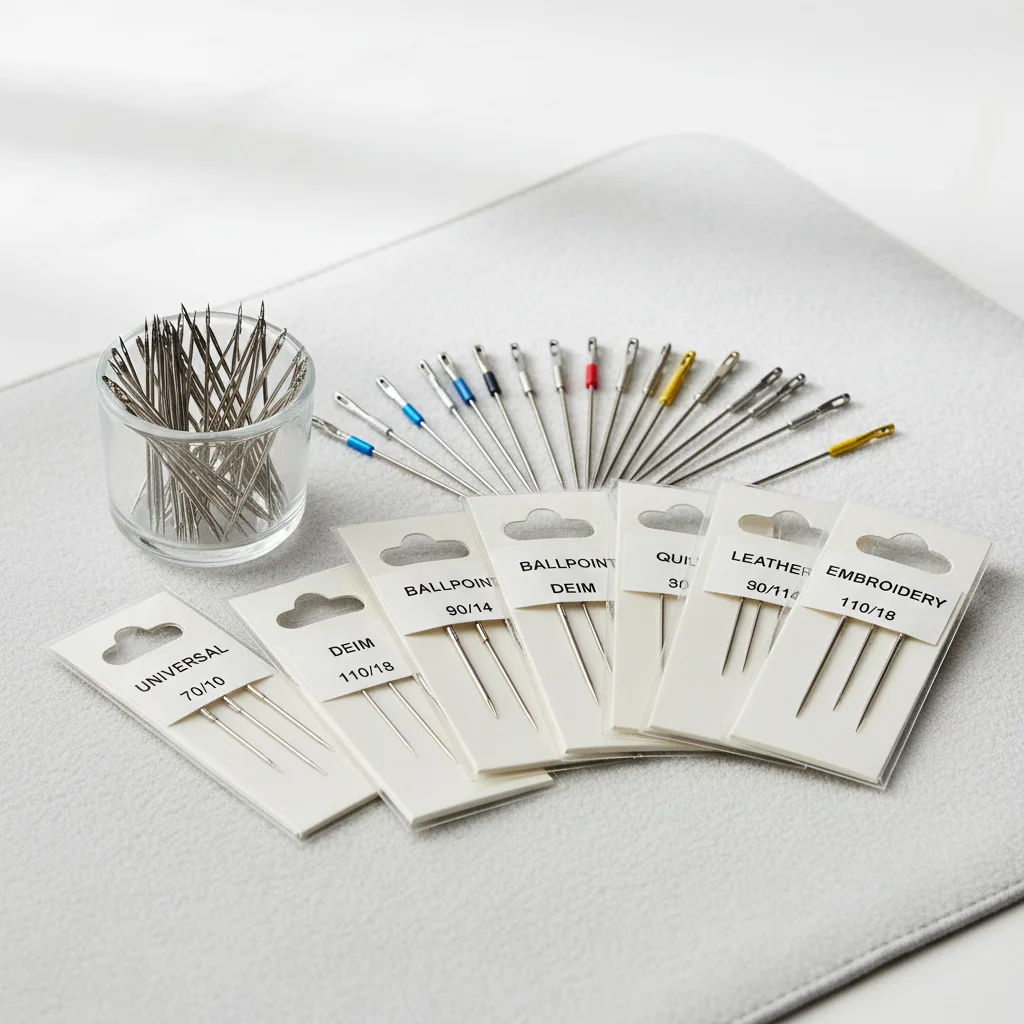
Choosing the correct sewing machine needle is crucial for achieving perfect stitches and preventing fabric damage. There are at least five primary types of sewing machine needles, each designed for specific fabrics and sewing tasks. Using the wrong needle can lead to skipped stitches, broken threads, and even damage to your machine or project. Understanding the different types and their applications will significantly improve your sewing results and make your projects more enjoyable.
Understanding Needle Anatomy and Sizing
Every sewing machine needle has several key parts: the shank, which inserts into the machine; the shaft, which determines the needle’s size; the groove, which protects the thread; the scarf, which allows the bobbin hook to pick up the thread; and the point, which penetrates the fabric. Needle sizes are typically indicated by two numbers, such as 70/10 or 90/14. The first number is the European metric size (in hundredths of a millimeter), and the second is the American size. A smaller number indicates a finer needle, suitable for delicate fabrics, while a larger number signifies a thicker needle for heavier materials. For see our sewing machine recommendations on this site.
Universal Needles: The All-Rounder
Universal needles are the most common type and a good starting point for many sewing projects. They have a slightly rounded point, making them versatile enough for a wide range of woven and knit fabrics. While they can handle various materials, they may not always provide the best results for very delicate or very heavy fabrics. They are ideal for general sewing tasks like mending, crafting, and working with medium-weight cottons, linens, and some synthetics. Always keep a pack of universal needles on hand for everyday use.
Ballpoint Needles: For Knits and Stretch Fabrics
Ballpoint needles, also known as jersey needles, are specifically designed for knit and stretch fabrics. Instead of piercing the fabric fibers, they have a rounded tip that pushes between the threads, preventing damage and skipped stitches. This is essential for maintaining the integrity and stretch of materials like jersey, spandex, and fleece. Using a universal needle on knits can cause runs or holes, so a ballpoint needle is a must-have for any project involving stretchy materials.
Sharp/Microtex Needles: Precision for Wovens and Microfibers
|
Our Picks for the Best Sewing Machine in 2026
As an Amazon Associate I earn from qualifying purchases.
|
||
| Num | Product | Action |
|---|---|---|
| 1 | Brother Sewing and Quilting Machine, XR3774, 37 Built-in Stitches, Wide Table, 8 Included Sewing Feet |

|
| 2 | SINGER Heavy Duty 4452 High-Speed Sewing Machine with Accessory Kit | Strong Motor with Enhanced Piercing Power, 110 Stitch Applications, Full Metal Frame, 1-Step Buttonhole & LED Lights, Grey |
|
| 3 | SINGER Heavy Duty 4411 High-Speed Sewing Machine with Accessory Kit | Strong Motor, Enhanced Piercing Power, 69 Stitch Applications, Full Metal Frame, 4-Step Buttonhole & LED Light, Grey |
|
| 4 | Brother CS7000X Computerized Sewing and Quilting Machine, 70 Built-in Stitches, LCD Display, Wide Table, 10 Included Feet, White |
|
| 5 | Brother XM2701 Sewing Machine, Lightweight, Full Featured, 27 Stitches, 6 Included Feet |
|
| 6 | Brother SE700 Sewing and Embroidery Machine, Wireless LAN Connected, 135 Built-in Designs, 103 Built-in Stitches, Computerized, 4" x 4" Hoop Area, 3.7" Touchscreen Display, 8 Included Feet, White |
|
| 7 | Brother FB1757X Mechanical Sewing Machine |
|
| 8 | Janome Cat Fancy Easy-to-Use Sewing Machine with Interior Metal Frame, Bobbin Diagram, Tutorial Videos, Made with Beginners in Mind!, Multi-Color |
|
| 9 | Brother RLX3817 17-Stitch Sewing Machine, White(Renewed) |
|
| 10 | SINGER Heavy Duty 4423 Meltwater Blue High Speed Sewing Machine with Accessory Kit | Strong Motor With Enhanced Piercing Power, 97 Stitch Applications, Full Metal frame, 1-step Buttonhole & LED Light |
|
Sharp needles, often called Microtex needles, feature a very sharp, acute point. This design allows them to penetrate tightly woven fabrics, microfibers, and synthetic suedes cleanly and precisely. They are excellent for achieving perfectly straight stitches and crisp seams on materials like silk, chiffon, poplin, and coated fabrics. If you’re working on intricate details or fine garments, a sharp needle will provide superior results compared to a universal needle.
Denim/Jeans Needles: Power Through Heavy Fabrics
Denim needles are engineered with a very sharp, strong point and a reinforced shank to prevent bending and breaking when sewing through thick, dense fabrics. They are perfect for denim, canvas, duck cloth, and other heavy-duty materials. The robust construction helps them penetrate multiple layers of fabric without deflecting, ensuring consistent stitch formation. When hemming jeans or creating durable bags, a denim needle is indispensable.
Leather Needles: Specialized for Animal Hides
Leather needles have a wedge-shaped or chisel point that creates a clean, knife-like cut through leather, suede, and other non-woven materials. This unique point prevents tearing and ensures smooth, even stitches. It’s crucial to use a leather needle when working with these materials, as a standard needle can damage the fabric and lead to an uneven finish. Remember that once a hole is made in leather, it’s permanent, so precision is key.
Other Specialized Needle Types
- Quilting Needles: Designed with a slightly rounded point and a tapered shaft to penetrate multiple layers of fabric and batting smoothly.
- Embroidery Needles: Feature a larger eye and a special scarf to prevent friction and breakage of delicate embroidery threads.
- Metallic Needles: Have an extra-large eye and a polished groove to accommodate metallic and other specialty threads without fraying.
- Twin Needles: Consist of two needles mounted on a single shank, used for decorative stitching, parallel topstitching, and creating double hems.
- Stretch Needles: Similar to ballpoint but with a deeper scarf and a specially designed eye to prevent skipped stitches on highly elastic fabrics like lycra and swimwear.
By understanding the characteristics and applications of these various sewing machine needles, you can confidently select the right tool for every project. Always match your needle to your fabric and thread for the best possible outcome, ensuring smooth sewing and professional-looking results.
