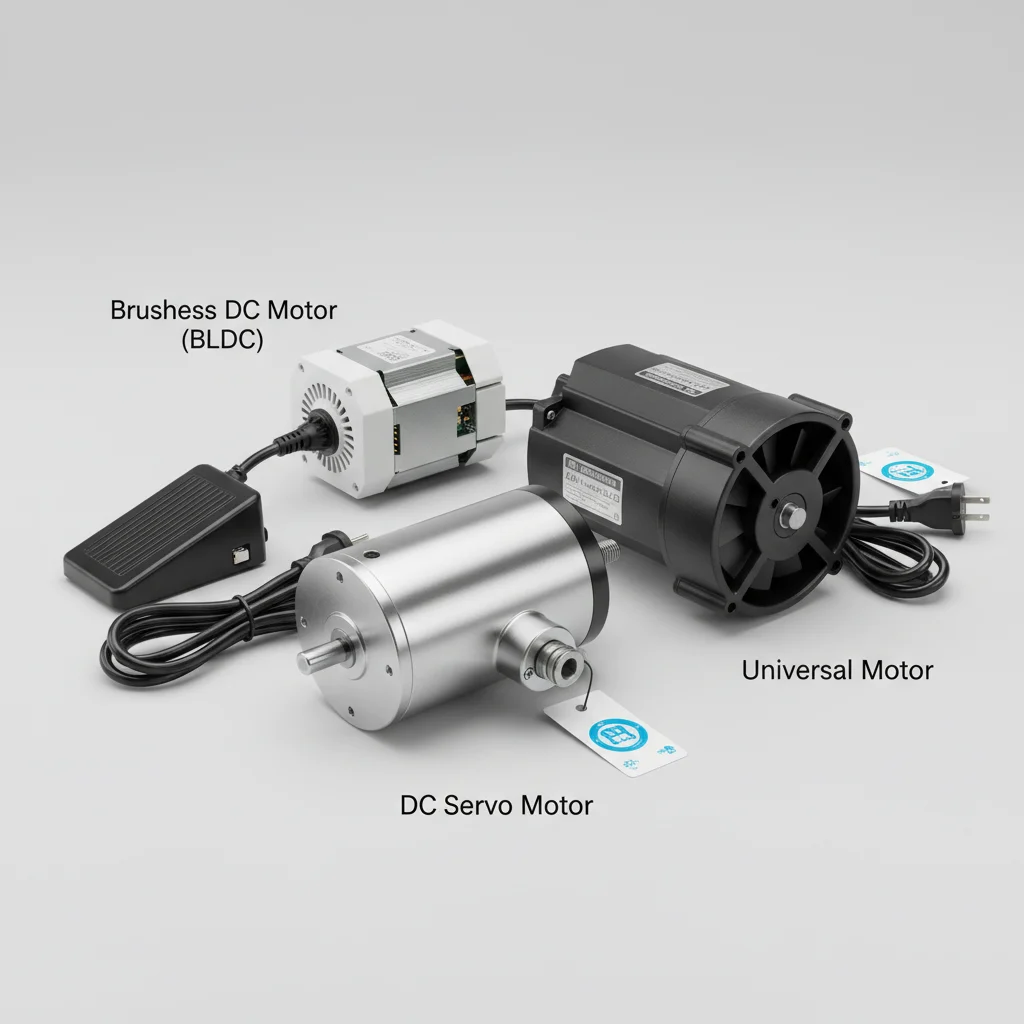
Understanding the different types of sewing machine motors is crucial for selecting a machine that meets your specific sewing needs. There are primarily three types of motors found in modern sewing machines: clutch motors, servo motors, and built-in (or direct drive) motors. Each offers distinct advantages in terms of power, speed control, and noise level, directly impacting your sewing experience and the types of fabrics you can comfortably work with.
Clutch Motors: Traditional Powerhouses
Clutch motors are typically found in older industrial sewing machines. These motors are powerful and designed for continuous, heavy-duty use. They operate at a constant speed, and the sewing machine’s needle movement is engaged or disengaged via a clutch mechanism, usually controlled by a foot pedal. While incredibly durable and capable of handling thick materials, clutch motors are known for being noisy and consuming more electricity. They are also quite heavy and bulky, making them unsuitable for home use where portability and quiet operation are often desired.
Servo Motors: Modern Efficiency and Control
Servo motors represent a significant advancement over clutch motors, especially for industrial and semi-industrial machines. They offer precise speed control, allowing the user to sew stitch-by-stitch or at high speeds with ease. Unlike clutch motors, servo motors only consume power when the machine is actively sewing, making them far more energy-efficient. They are also considerably quieter and lighter. Many modern heavy-duty domestic machines and some advanced home models now incorporate servo motor technology for enhanced control and a more pleasant sewing environment. This type of motor is ideal for projects requiring intricate detail or working with a variety of fabric weights.
Built-in (Direct Drive) Motors: Compact and Quiet
|
Our Picks for the Best Sewing Machine in 2026
As an Amazon Associate I earn from qualifying purchases.
|
||
| Num | Product | Action |
|---|---|---|
| 1 | SINGER Heavy Duty 4423 Meltwater Blue High Speed Sewing Machine with Accessory Kit | Strong Motor With Enhanced Piercing Power, 97 Stitch Applications, Full Metal frame, 1-step Buttonhole & LED Light |

|
| 2 | Brother SE700 Sewing and Embroidery Machine, Wireless LAN Connected, 135 Built-in Designs, 103 Built-in Stitches, Computerized, 4" x 4" Hoop Area, 3.7" Touchscreen Display, 8 Included Feet, White |
|
| 3 | SINGER Heavy Duty 4411 High-Speed Sewing Machine with Accessory Kit | Strong Motor, Enhanced Piercing Power, 69 Stitch Applications, Full Metal Frame, 4-Step Buttonhole & LED Light, Grey |
|
| 4 | Brother RLX3817 17-Stitch Sewing Machine, White(Renewed) |
|
| 5 | Brother CS7000X Computerized Sewing and Quilting Machine, 70 Built-in Stitches, LCD Display, Wide Table, 10 Included Feet, White |
|
| 6 | SINGER Heavy Duty 4452 High-Speed Sewing Machine with Accessory Kit | Strong Motor with Enhanced Piercing Power, 110 Stitch Applications, Full Metal Frame, 1-Step Buttonhole & LED Lights, Grey |
|
| 7 | Brother Sewing and Quilting Machine, XR3774, 37 Built-in Stitches, Wide Table, 8 Included Sewing Feet |
|
| 8 | Brother XM2701 Sewing Machine, Lightweight, Full Featured, 27 Stitches, 6 Included Feet |
|
| 9 | Janome Cat Fancy Easy-to-Use Sewing Machine with Interior Metal Frame, Bobbin Diagram, Tutorial Videos, Made with Beginners in Mind!, Multi-Color |
|
| 10 | Brother FB1757X Mechanical Sewing Machine |
|
Built-in, or direct drive, motors are the most common type found in modern domestic sewing machines. These motors are integrated directly into the machine’s head, eliminating the need for belts and reducing vibration and noise. They offer excellent speed control, similar to servo motors, and are very energy-efficient. Their compact design contributes to the overall lighter weight and smaller footprint of home sewing machines. While generally less powerful than industrial clutch or standalone servo motors, built-in motors are perfectly adequate for a wide range of home sewing projects, from delicate garments to light upholstery.
Choosing the Right Motor for Your Projects
When selecting a sewing machine, consider the types of projects you’ll be undertaking. For occasional light sewing and general garment construction, a machine with a built-in motor will likely suffice. If you plan on tackling heavier fabrics like denim, canvas, or multiple layers, a machine with a robust built-in motor or even a semi-industrial model with a servo motor would be a better investment. Industrial users or those with very specific, high-volume needs might still opt for machines with clutch motors, though servo motors are increasingly replacing them due to their efficiency and control.
- Consider fabric thickness and layers you’ll sew.
- Evaluate your need for precise speed control.
- Assess the importance of noise level and energy consumption.
- Determine if portability is a key factor for your workspace.
- Research motor wattage or horsepower for heavy-duty tasks.
Maintenance and Longevity of Sewing Machine Motors
Regardless of the motor type, proper maintenance is key to ensuring the longevity and performance of your sewing machine. For machines with external motors (clutch or standalone servo), keeping the motor free of dust and lint is important. For all machines, regular cleaning and oiling according to the manufacturer’s instructions will prevent strain on the motor and other moving parts. Avoid forcing thick fabrics through a machine not designed for them, as this can overheat and damage the motor.If you notice any unusual noises or a decrease in power, it’s best to consult a qualified technician to prevent further damage.
