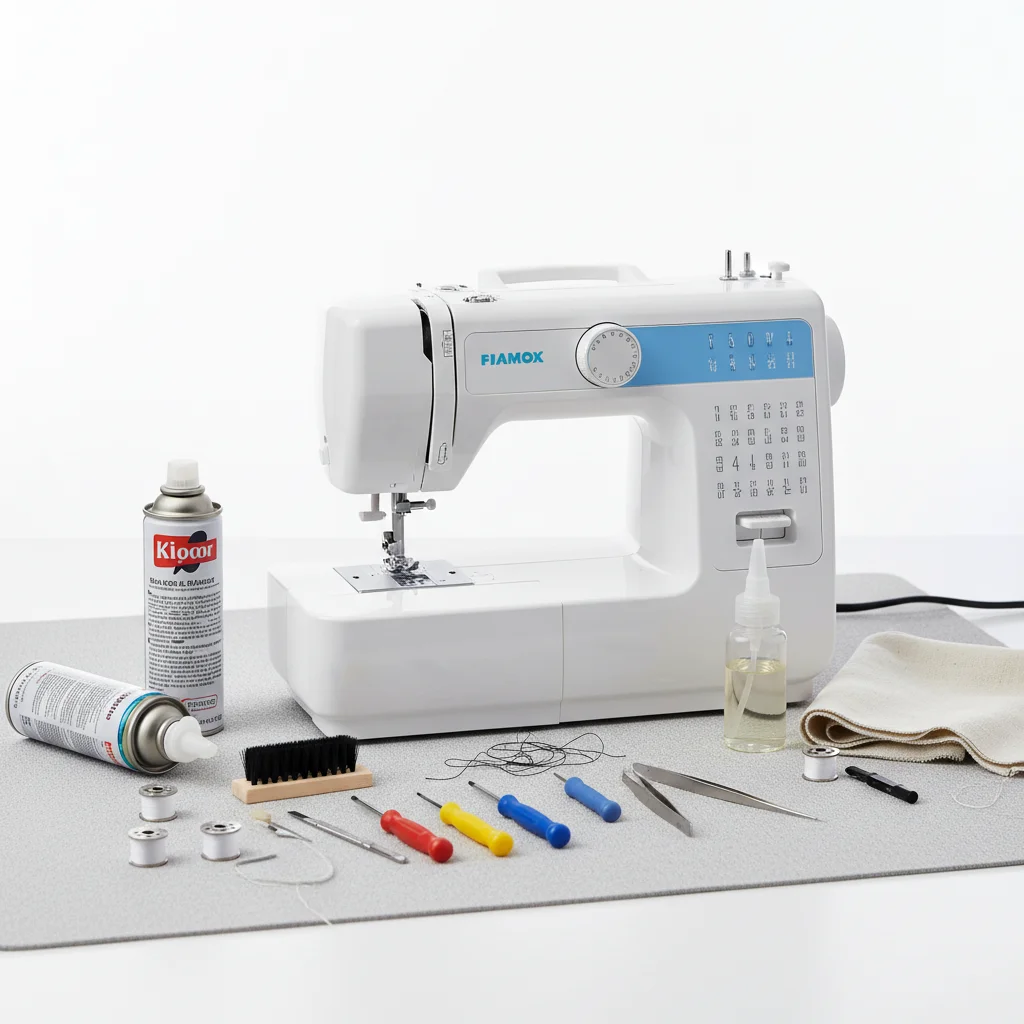
Proper sewing machine maintenance is crucial for extending the life of your machine and ensuring consistent, high-quality stitches. By dedicating just 15-30 minutes to routine cleaning and oiling every 10-12 hours of use, you can prevent common issues like skipped stitches, thread jams, and excessive noise, saving you time and money on repairs.
Why Regular Cleaning is Essential for Your Sewing Machine
Dust, lint, and fabric fibers accumulate rapidly within your sewing machine’s intricate mechanisms. This buildup can clog feed dogs, interfere with tension discs, and even cause motor strain. Regular cleaning, especially around the bobbin case and needle plate, prevents these issues, ensuring smooth fabric feeding and precise stitch formation. A small, soft brush and a lint-free cloth are your best tools for this task.
The Importance of Oiling Your Sewing Machine
Just like any other mechanical device, a sewing machine requires lubrication to reduce friction between moving parts. Oiling specific points, as outlined in your machine’s manual, prevents wear and tear, reduces noise, and ensures all components move freely. Using only high-quality sewing machine oil is paramount; household oils can gum up the works and cause more harm than good. Most machines benefit from a drop or two of oil in key areas every 20-30 hours of sewing.
When to Replace Key Components
|
Our Picks for the Best Sewing Machine in 2026
As an Amazon Associate I earn from qualifying purchases.
|
||
| Num | Product | Action |
|---|---|---|
| 1 | Brother SE700 Sewing and Embroidery Machine, Wireless LAN Connected, 135 Built-in Designs, 103 Built-in Stitches, Computerized, 4" x 4" Hoop Area, 3.7" Touchscreen Display, 8 Included Feet, White |

|
| 2 | SINGER Heavy Duty 4423 Meltwater Blue High Speed Sewing Machine with Accessory Kit | Strong Motor With Enhanced Piercing Power, 97 Stitch Applications, Full Metal frame, 1-step Buttonhole & LED Light |
|
| 3 | Brother FB1757X Mechanical Sewing Machine |
|
| 4 | Brother Sewing and Quilting Machine, XR3774, 37 Built-in Stitches, Wide Table, 8 Included Sewing Feet |
|
| 5 | Brother XM2701 Sewing Machine, Lightweight, Full Featured, 27 Stitches, 6 Included Feet |
|
| 6 | Janome Cat Fancy Easy-to-Use Sewing Machine with Interior Metal Frame, Bobbin Diagram, Tutorial Videos, Made with Beginners in Mind!, Multi-Color |
|
| 7 | Brother RLX3817 17-Stitch Sewing Machine, White(Renewed) |
|
| 8 | SINGER Heavy Duty 4411 High-Speed Sewing Machine with Accessory Kit | Strong Motor, Enhanced Piercing Power, 69 Stitch Applications, Full Metal Frame, 4-Step Buttonhole & LED Light, Grey |
|
| 9 | Brother CS7000X Computerized Sewing and Quilting Machine, 70 Built-in Stitches, LCD Display, Wide Table, 10 Included Feet, White |
|
| 10 | SINGER Heavy Duty 4452 High-Speed Sewing Machine with Accessory Kit | Strong Motor with Enhanced Piercing Power, 110 Stitch Applications, Full Metal Frame, 1-Step Buttonhole & LED Lights, Grey |
|
Certain parts of your sewing machine are consumables and need periodic replacement. The needle, for instance, should be changed after every 8-10 hours of sewing or at the start of every new project to prevent skipped stitches and fabric damage. Bobbins, while reusable, can become warped over time and should be inspected regularly. Similarly, the bobbin case might need replacement if it shows signs of wear that affect thread tension. Keeping a small stock of these essential parts ensures you’re always ready to sew.
- Change your needle after 8-10 hours of sewing or per project.
- Inspect bobbins for warping or damage regularly.
- Clean the bobbin area and feed dogs after every few hours of use.
- Oil your machine according to the manufacturer’s instructions.
- Check the power cord and foot pedal for any signs of wear.
Troubleshooting Common Maintenance-Related Issues
Many common sewing machine problems can be traced back to a lack of maintenance. Skipped stitches often indicate a dull or bent needle, or lint buildup in the bobbin area. Thread breaking frequently points to incorrect tension, a burr on the needle plate, or a dirty thread path. By systematically cleaning and oiling your machine, and replacing worn parts, you can resolve most of these issues without needing professional help. Always consult your machine’s manual for specific troubleshooting steps.
Investing a little time in routine sewing machine maintenance will pay dividends in the long run, ensuring your machine remains a reliable tool for all your creative projects. For recommended maintenance kits and high-quality sewing machine oil, check out. If you’re looking for replacement needles and bobbins, you can find a wide selection at.
Frequently Asked Questions
How often should I clean my sewing machine?
You should clean your sewing machine every 10-12 hours of use to prevent lint and fabric fiber buildup. Focus on areas like the bobbin case and needle plate to ensure smooth fabric feeding and precise stitch formation.
What kind of oil should I use for my sewing machine?
Always use high-quality sewing machine oil for lubrication. Household oils can gum up the intricate mechanisms, causing more harm than good. Most machines benefit from a drop or two of oil in key areas every 20-30 hours of sewing.
When is it necessary to replace the needle on a sewing machine?
The needle should be replaced after every 8-10 hours of sewing or at the start of every new project. This prevents common problems like skipped stitches and potential fabric damage.
What are common signs that my sewing machine needs maintenance?
Common signs include skipped stitches, frequent thread breaking, and excessive noise during operation. These issues often indicate a dull needle, lint buildup, incorrect tension, or a lack of lubrication.
Can regular maintenance prevent major sewing machine repairs?
Yes, consistent routine maintenance can significantly reduce the need for major repairs. By cleaning, oiling, and replacing worn parts regularly, you can address minor issues before they escalate into costly problems.

I’ve always been a bit intimidated by oiling my machine, but the guide here made it so clear. I used to get so many skipped stitches, especially with thicker fabrics, and after following the oiling advice, my machine is running like new. It really does make a difference in the stitch quality and overall smoothness. Definitely worth the 15 minutes!
I tried to follow the advice about cleaning around the needle plate, but I found it a bit tricky to get into all the nooks and crannies with just a brush. My machine still had some thread jams even after a thorough cleaning. Maybe I need a different type of tool, or my machine is just too old. The idea of preventing motor strain is good though.
My old machine was constantly having tension disc issues, and I never realized how much lint could interfere with them. After reading this, I made sure to really get in there with a lint-free cloth, and it’s made a world of difference. No more uneven stitches! It’s amazing how a little maintenance every 10-12 hours of use can prevent so many headaches.
This was a great reminder about how important regular cleaning is. I usually just brush out the bobbin area, but I hadn’t thought about how much lint can build up around the feed dogs. My machine was starting to sound a bit noisy, and after a good clean with a soft brush, it’s much quieter. I wish it had mentioned specific oil brands, but the general tips were super helpful.