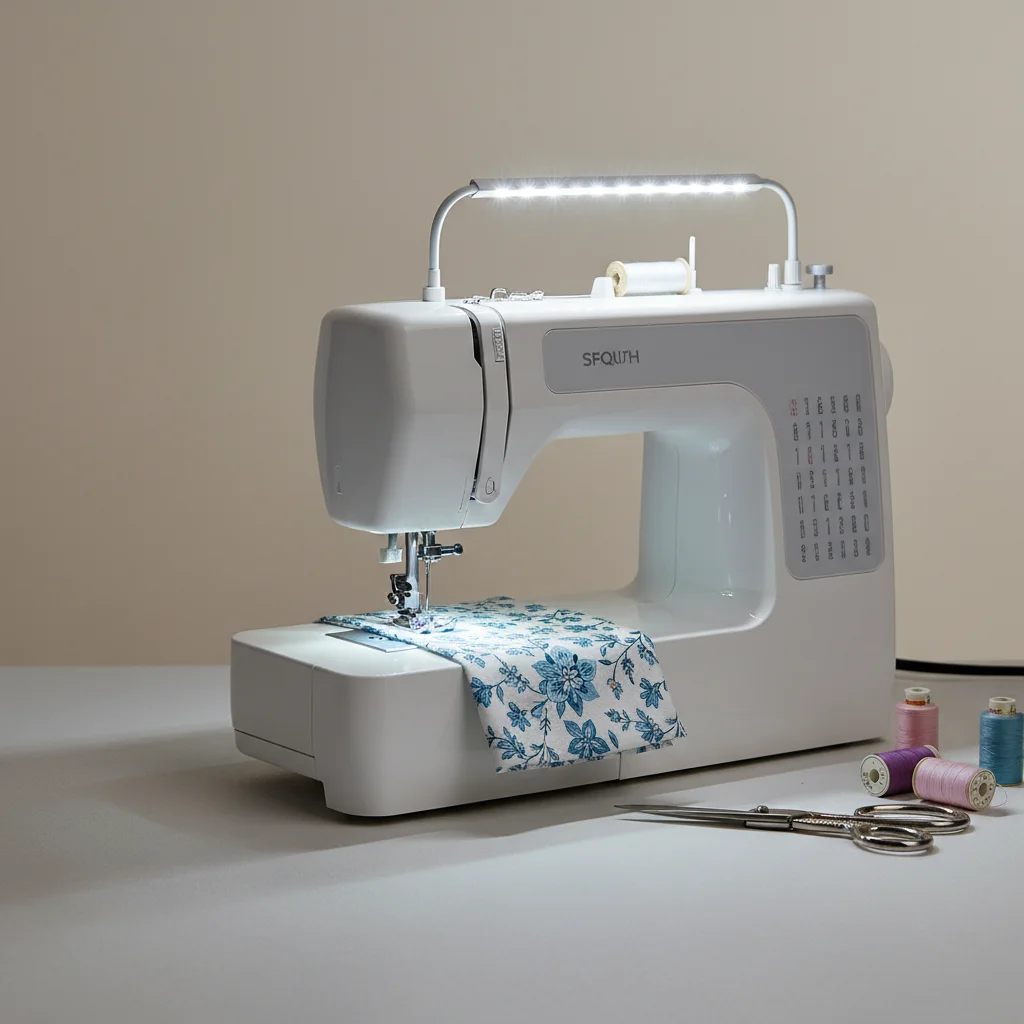
Effective sewing machine lighting is crucial for precision and reducing eye strain, especially during intricate projects. There are typically three main types of lighting solutions available for sewing machines: integrated LED lights, external clip-on lamps, and dedicated task lighting. Each offers distinct advantages depending on your sewing setup and specific needs.
Why Proper Lighting Matters for Sewing
Good lighting directly impacts the quality of your sewing. It allows you to clearly see your fabric, thread, and needle, preventing mistakes like skipped stitches or uneven seams. Poor lighting can lead to eye fatigue, headaches, and a general decrease in productivity and enjoyment. Investing in the right lighting setup is an investment in your comfort and the accuracy of your work.
Types of Sewing Machine Lighting Solutions
Integrated LED lights are common in newer sewing machines, offering direct illumination of the needle area. While convenient, their intensity and coverage can vary. External clip-on lamps provide more flexibility, allowing you to direct light precisely where it’s needed. These often come with adjustable necks and various brightness settings. Dedicated task lighting, such as floor lamps or desk lamps designed for crafts, offers broader illumination for your entire workspace, complementing the machine’s built-in light.
- Integrated LED lights for direct needle illumination.
- Clip-on lamps for adjustable, focused light.
- Task lamps for broader workspace illumination.
- Magnifying lamps for intricate detail work.
- Overhead room lighting as a foundational layer.
Choosing the Right Brightness and Color Temperature
|
Our Picks for the Best Sewing Machine in 2026
As an Amazon Associate I earn from qualifying purchases.
|
||
| Num | Product | Action |
|---|---|---|
| 1 | Brother XM2701 Sewing Machine, Lightweight, Full Featured, 27 Stitches, 6 Included Feet |

|
| 2 | SINGER Heavy Duty 4452 High-Speed Sewing Machine with Accessory Kit | Strong Motor with Enhanced Piercing Power, 110 Stitch Applications, Full Metal Frame, 1-Step Buttonhole & LED Lights, Grey |
|
| 3 | SINGER Heavy Duty 4411 High-Speed Sewing Machine with Accessory Kit | Strong Motor, Enhanced Piercing Power, 69 Stitch Applications, Full Metal Frame, 4-Step Buttonhole & LED Light, Grey |
|
| 4 | Brother FB1757X Mechanical Sewing Machine |
|
| 5 | Brother SE700 Sewing and Embroidery Machine, Wireless LAN Connected, 135 Built-in Designs, 103 Built-in Stitches, Computerized, 4" x 4" Hoop Area, 3.7" Touchscreen Display, 8 Included Feet, White |
|
| 6 | Janome Cat Fancy Easy-to-Use Sewing Machine with Interior Metal Frame, Bobbin Diagram, Tutorial Videos, Made with Beginners in Mind!, Multi-Color |
|
| 7 | Brother RLX3817 17-Stitch Sewing Machine, White(Renewed) |
|
| 8 | SINGER Heavy Duty 4423 Meltwater Blue High Speed Sewing Machine with Accessory Kit | Strong Motor With Enhanced Piercing Power, 97 Stitch Applications, Full Metal frame, 1-step Buttonhole & LED Light |
|
| 9 | Brother CS7000X Computerized Sewing and Quilting Machine, 70 Built-in Stitches, LCD Display, Wide Table, 10 Included Feet, White |
|
| 10 | Brother Sewing and Quilting Machine, XR3774, 37 Built-in Stitches, Wide Table, 8 Included Sewing Feet |
|
When selecting lighting, consider both brightness (lumens) and color temperature (Kelvin). A brightness of 800-1000 lumens is generally recommended for the immediate sewing area. For color temperature, a neutral white light (around 4000K-5000K) is ideal as it mimics natural daylight, providing true color rendition of your fabrics and threads. Avoid overly warm or cool lights, which can distort colors and cause eye strain.
Optimizing Your Sewing Workspace Lighting
To create an optimal sewing environment, combine different light sources. Use your machine’s built-in light or a clip-on lamp for direct illumination of the needle. Supplement this with a task lamp to brighten your entire work surface. Ensure there are no harsh shadows cast by your hands or the machine itself. Positioning your light source to the side or slightly in front of your work can help minimize shadows. Consider adding a dimmer switch to adjust brightness as needed for different tasks and times of day.
Maintenance and Upgrades for Your Lighting
Regularly clean your light fixtures and bulbs to ensure maximum output. Dust and grime can significantly reduce light intensity. If your machine has an older incandescent bulb, consider upgrading to an LED bulb, which offers brighter light, uses less energy, and lasts much longer. For external lamps, check the bulb type and replace it with a high-quality LED equivalent for improved performance.Upgrading your lighting can be a simple yet impactful way to enhance your sewing experience and precision.
