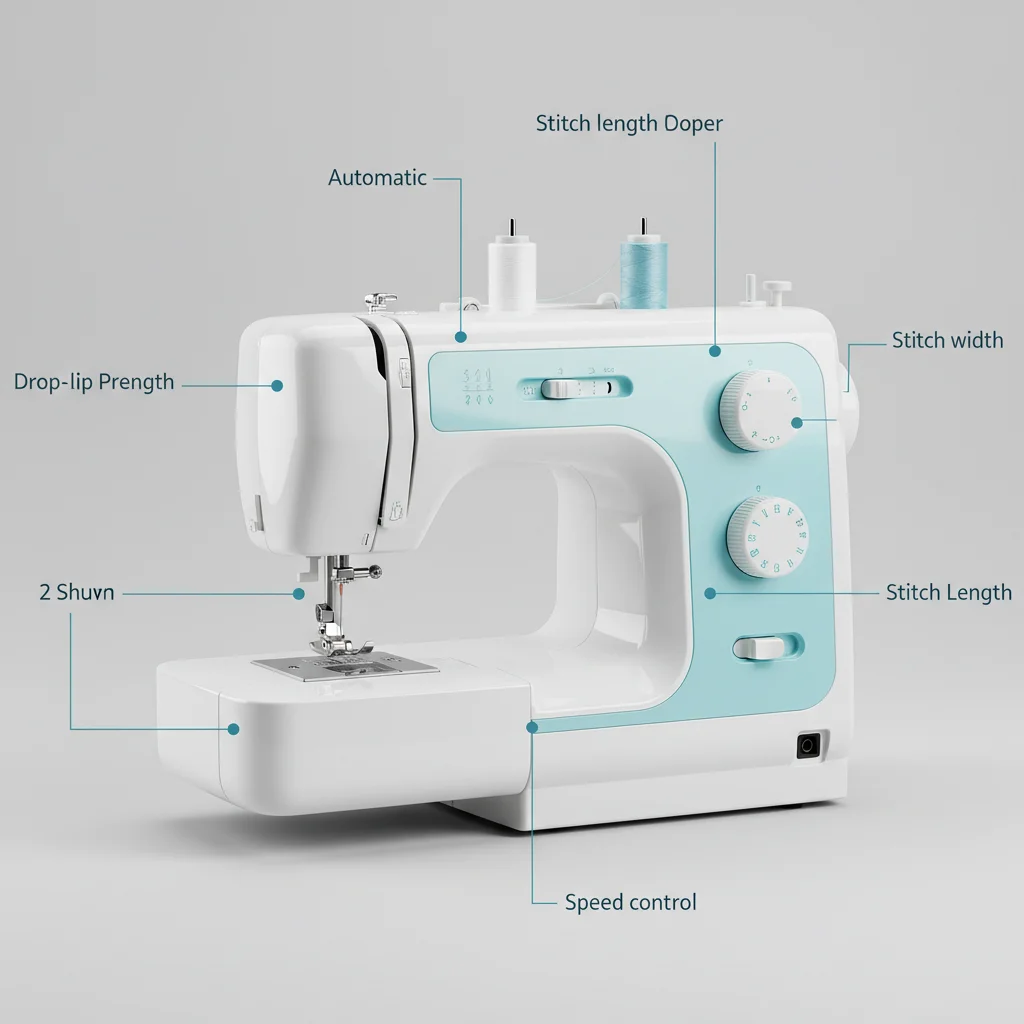
Choosing the right sewing machine for beginners involves prioritizing five key features: simplicity, essential stitch selection, mechanical operation, durability, and ease of maintenance. A good beginner machine simplifies the learning curve, allowing new sewers to focus on technique rather than complex settings, ensuring a positive and confident start to their sewing journey.
Understanding Essential Features for New Sewers
When you’re just starting out, simplicity and user-friendliness are paramount. Look for machines with intuitive controls, clearly labeled dials, and straightforward threading systems. Automatic needle threaders, while not strictly essential, can significantly reduce frustration for novices. Variable speed control is another valuable feature, allowing you to sew at a slower, more manageable pace until you gain confidence.
Stitch selection should also be considered. While advanced machines boast hundreds of stitches, a beginner only needs a handful: straight stitch, zigzag stitch, and perhaps a buttonhole stitch. Overwhelming options can be counterproductive. Focus on machines that offer these basic, versatile stitches and make them easy to select.
Mechanical vs. Computerized: What’s Best for You?
The debate between mechanical and computerized sewing machines often arises for beginners. Mechanical machines are generally simpler, more durable, and often more affordable. They rely on dials and levers for adjustments, making them easy to understand and troubleshoot. Computerized machines, on the other hand, offer more features, precise stitch control, and often come with LCD screens. For a beginner, a mechanical machine often provides a less intimidating entry point, though some entry-level computerized models are designed with user-friendliness in mind.
- Mechanical machines are typically more budget-friendly.
- Computerized machines offer more automated features.
- Consider your comfort level with technology.
- Mechanical models are often easier to maintain.
- Some computerized machines have beginner-friendly modes.
Key Considerations for Budget and Durability
|
Our Picks for the Best Sewing Machine in 2026
As an Amazon Associate I earn from qualifying purchases.
|
||
| Num | Product | Action |
|---|---|---|
| 1 | SINGER Heavy Duty 4423 Meltwater Blue High Speed Sewing Machine with Accessory Kit | Strong Motor With Enhanced Piercing Power, 97 Stitch Applications, Full Metal frame, 1-step Buttonhole & LED Light |

|
| 2 | Brother Sewing and Quilting Machine, XR3774, 37 Built-in Stitches, Wide Table, 8 Included Sewing Feet |
|
| 3 | Brother RLX3817 17-Stitch Sewing Machine, White(Renewed) |
|
| 4 | Brother XM2701 Sewing Machine, Lightweight, Full Featured, 27 Stitches, 6 Included Feet |
|
| 5 | SINGER Heavy Duty 4411 High-Speed Sewing Machine with Accessory Kit | Strong Motor, Enhanced Piercing Power, 69 Stitch Applications, Full Metal Frame, 4-Step Buttonhole & LED Light, Grey |
|
| 6 | Brother CS7000X Computerized Sewing and Quilting Machine, 70 Built-in Stitches, LCD Display, Wide Table, 10 Included Feet, White |
|
| 7 | Janome Cat Fancy Easy-to-Use Sewing Machine with Interior Metal Frame, Bobbin Diagram, Tutorial Videos, Made with Beginners in Mind!, Multi-Color |
|
| 8 | Brother SE700 Sewing and Embroidery Machine, Wireless LAN Connected, 135 Built-in Designs, 103 Built-in Stitches, Computerized, 4" x 4" Hoop Area, 3.7" Touchscreen Display, 8 Included Feet, White |
|
| 9 | SINGER Heavy Duty 4452 High-Speed Sewing Machine with Accessory Kit | Strong Motor with Enhanced Piercing Power, 110 Stitch Applications, Full Metal Frame, 1-Step Buttonhole & LED Lights, Grey |
|
| 10 | Brother FB1757X Mechanical Sewing Machine |
|
Setting a budget is an important first step. While it’s tempting to opt for the cheapest option, investing a little more in a reputable brand can save you headaches down the line. A durable machine will withstand the inevitable learning mistakes and provide consistent performance. Look for machines with a sturdy metal frame, as this indicates better internal component stability and longevity. Reading reviews from other beginners can also provide insight into a machine’s real-world durability.
Don’t forget to factor in the availability of accessories and parts. A machine from a well-known brand will likely have readily available presser feet, bobbins, and other consumables, making your sewing experience smoother.
Maintenance and Ease of Use for Longevity
Even a beginner’s machine benefits from proper maintenance. Choose a machine that is relatively easy to clean and oil, as this will extend its lifespan and ensure smooth operation. Many beginner-friendly models come with clear instructions for basic maintenance tasks. A top-loading bobbin system, for example, is often preferred by beginners for its ease of access and visibility.
Consider the weight and portability if you plan to move your machine frequently. While a heavier machine often indicates more robust construction, a lighter model might be more practical for classes or small living spaces. Ultimately, the best sewing machine for beginners is one that feels comfortable and inspires confidence, allowing you to enjoy the creative process without unnecessary frustration.
Frequently Asked Questions
What are the most important features for a beginner sewing machine?
The most important features for a beginner sewing machine include intuitive controls, essential stitch selection (straight, zigzag, buttonhole), variable speed control, and a sturdy metal frame for durability. These features simplify the learning process and ensure consistent performance.
Should a beginner choose a mechanical or computerized sewing machine?
For most beginners, a mechanical sewing machine is often recommended due to its simplicity, durability, and affordability. Mechanical models use dials and levers, making them easier to understand and troubleshoot compared to more complex computerized options.
How does budget impact the choice of a beginner sewing machine?
Setting a budget is crucial, but investing slightly more in a reputable brand can prevent future issues. While cheap options exist, a machine with a sturdy metal frame from a known brand typically offers better longevity and consistent performance for new sewers.
What basic stitches are essential for a new sewer?
A new sewer primarily needs three basic stitches: the straight stitch for general seams, the zigzag stitch for finishing edges and stretch fabrics, and a simple buttonhole stitch. Machines with these core stitches are sufficient without overwhelming options.
Why is ease of maintenance important for a beginner's sewing machine?
Ease of maintenance is important because regular cleaning and oiling extend the machine's lifespan and ensure smooth operation. Beginner-friendly models often have clear instructions and features like top-loading bobbins, making upkeep simpler for novices.
How to Choose Your First Sewing Machine
Selecting the ideal sewing machine as a beginner involves evaluating key features to ensure a smooth and enjoyable learning experience.
Look for machines with intuitive controls, clearly labeled dials, and straightforward threading systems. Features like automatic needle threaders or variable speed control can significantly reduce frustration for new sewers.
Focus on machines that offer fundamental stitches such as straight, zigzag, and a basic buttonhole. Avoid models with hundreds of complex stitches, as these can be overwhelming and unnecessary for initial projects.
For beginners, mechanical machines are often more durable, affordable, and easier to troubleshoot due to their manual adjustments. While computerized options exist, mechanical models provide a less intimidating entry point.
Set a realistic budget and invest in a machine with a sturdy metal frame from a reputable brand for longevity. This ensures the machine can withstand learning mistakes and provide consistent performance over time.
Choose a machine that is easy to clean and oil, with clear maintenance instructions. If you plan to move it frequently, consider its weight and portability, balancing robust construction with practical mobility.

Durability was a big factor for me when choosing my first sewing machine. I didn’t want something that would break down after a few uses. I ended up with a Janome machine that feels really solid and well-built, and it’s been a workhorse for all my beginner projects. It’s worth investing a little more for quality.
I totally agree with focusing on simplicity for a beginner machine! I just got my first one, a mechanical model, and it’s been so easy to learn on. The intuitive controls really make a difference when you’re trying to get the hang of things without getting overwhelmed. Definitely recommend going for something straightforward.
I picked up a machine that was supposed to be great for beginners, and while the variable speed control is super helpful, I wish I’d paid more attention to the threading system. It’s a bit fiddly, and an automatic needle threader would have saved me a lot of frustration. It’s not a dealbreaker, but definitely something to consider.
The advice about essential stitch selection is spot on. My old machine had a million stitches I never used, which was just confusing. My new one, a Brother CS6000i, has just the basics and it’s perfect for all my mending and simple projects. It’s nice not to have to scroll through a hundred options.