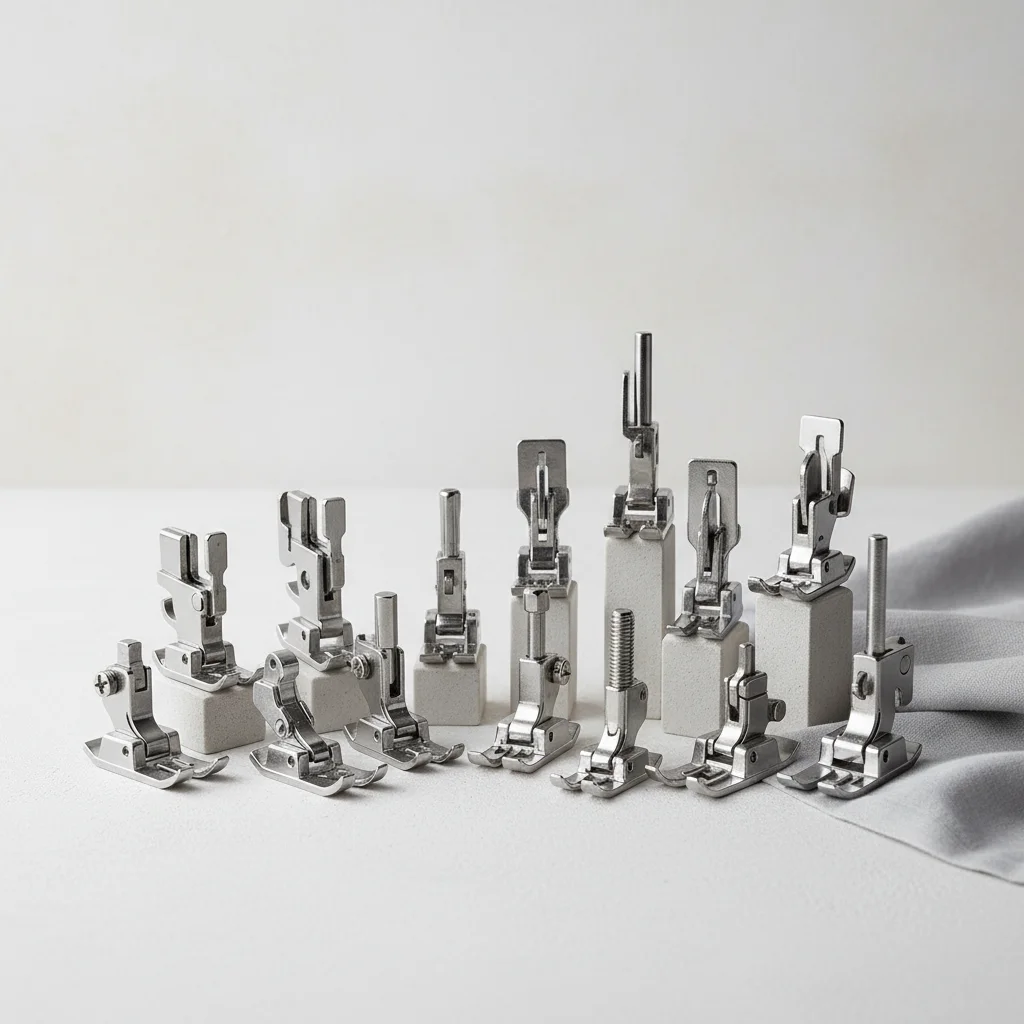
Sewing machine feet are essential tools that significantly impact stitching quality and versatility, with over 20 different types available for specific tasks. For example, a zipper foot creates precise seams, while a buttonhole foot automates uniform buttonholes. Understanding the correct foot for each project ensures professional results and simplifies complex techniques.
Understanding the Basics of Presser Feet
Every sewing machine includes a standard presser foot, typically a zigzag foot, suitable for basic straight and zigzag stitches. These small, interchangeable attachments hold fabric flat against the feed dogs, guiding the material and ensuring even tension. Using the correct foot prevents fabric puckering, slipping, or stretching, which is crucial for achieving clean, consistent stitches.
Essential Sewing Machine Feet for Every Project
While many presser feet exist, several are indispensable for most sewers. A zipper foot allows sewing close to zipper teeth without obstruction, creating neat installations. A buttonhole foot automates buttonhole creation, ensuring uniform and perfectly sized results. For quilters, a walking foot is vital, feeding multiple fabric layers evenly to prevent shifting and puckering.
- Zipper Foot: Ideal for installing zippers, piping, and cording.
- Buttonhole Foot: Creates perfectly sized and consistent buttonholes.
- Walking Foot: Essential for quilting, working with slippery fabrics, or multiple layers.
- Overcasting Foot: Finishes raw edges to prevent fraying, mimicking a serger stitch.
- Blind Hem Foot: Produces an invisible hem for a professional finish.
Specialty Feet for Advanced Techniques
|
Our Picks for the Best Sewing Machine in 2026
As an Amazon Associate I earn from qualifying purchases.
|
||
| Num | Product | Action |
|---|---|---|
| 1 | SINGER Heavy Duty 4423 Meltwater Blue High Speed Sewing Machine with Accessory Kit | Strong Motor With Enhanced Piercing Power, 97 Stitch Applications, Full Metal frame, 1-step Buttonhole & LED Light |

|
| 2 | Brother XM2701 Sewing Machine, Lightweight, Full Featured, 27 Stitches, 6 Included Feet |
|
| 3 | Brother CS7000X Computerized Sewing and Quilting Machine, 70 Built-in Stitches, LCD Display, Wide Table, 10 Included Feet, White |
|
| 4 | Brother FB1757X Mechanical Sewing Machine |
|
| 5 | SINGER Heavy Duty 4411 High-Speed Sewing Machine with Accessory Kit | Strong Motor, Enhanced Piercing Power, 69 Stitch Applications, Full Metal Frame, 4-Step Buttonhole & LED Light, Grey |
|
| 6 | Brother Sewing and Quilting Machine, XR3774, 37 Built-in Stitches, Wide Table, 8 Included Sewing Feet |
|
| 7 | Janome Cat Fancy Easy-to-Use Sewing Machine with Interior Metal Frame, Bobbin Diagram, Tutorial Videos, Made with Beginners in Mind!, Multi-Color |
|
| 8 | Brother RLX3817 17-Stitch Sewing Machine, White(Renewed) |
|
| 9 | SINGER Heavy Duty 4452 High-Speed Sewing Machine with Accessory Kit | Strong Motor with Enhanced Piercing Power, 110 Stitch Applications, Full Metal Frame, 1-Step Buttonhole & LED Lights, Grey |
|
| 10 | Brother SE700 Sewing and Embroidery Machine, Wireless LAN Connected, 135 Built-in Designs, 103 Built-in Stitches, Computerized, 4" x 4" Hoop Area, 3.7" Touchscreen Display, 8 Included Feet, White |
|
Beyond basic feet, specialty options expand creative possibilities. A free-motion quilting foot, also known as a darning foot, allows free fabric movement for intricate quilting designs or embroidery. A gathering foot quickly and evenly creates ruffles and gathers for skirts or decorative accents. For delicate or stretchy fabrics, a roller foot or a knit foot prevents stretching and ensures smooth feeding.
Choosing and Attaching the Right Foot
Most modern sewing machines use snap-on presser feet for easy changes. To detach, raise the needle and presser foot lever, then press the release button on the back of the foot holder. To attach a new foot, align its pin with the foot holder’s groove and lower the lever until it snaps into place. Always ensure the foot is securely attached before sewing to prevent damage. Refer to your machine’s manual for specific instructions, as some older models may require a screwdriver to change feet.
Investing in a good set of sewing machine feet can significantly enhance your sewing capabilities and make many tasks easier and more enjoyable. Consider a comprehensive set liketo cover a wide range of projects, or individual specialty feet such asfor specific needs.
Frequently Asked Questions
What is the primary function of a sewing machine presser foot?
A sewing machine presser foot holds the fabric flat against the feed dogs as the needle moves, guiding the material and ensuring even tension. This prevents the fabric from puckering, slipping, or stretching, which is crucial for achieving clean and consistent stitches.
How many different types of sewing machine feet are commonly available?
There are over 20 different types of sewing machine feet commonly available, each designed for specific tasks. These range from basic zigzag feet to specialized options like free-motion quilting feet and gathering feet.
Which sewing machine feet are considered essential for most sewers?
Essential sewing machine feet for most sewers include the zipper foot for installing zippers, the buttonhole foot for automated buttonholes, and the walking foot, especially useful for quilting and working with multiple fabric layers.
How do you attach a new presser foot to a modern sewing machine?
To attach a new presser foot on most modern snap-on machines, raise the needle and presser foot lever, then press the release button to detach the old foot. Align the pin on the new foot with the groove on the foot holder and lower the lever until it snaps into place securely.
What are specialty feet used for in advanced sewing techniques?
Specialty feet are used for advanced techniques like free-motion quilting with a darning foot for intricate designs, or creating ruffles and gathers quickly with a gathering foot. For delicate fabrics, a roller foot or knit foot prevents stretching.
How to Change a Sewing Machine Presser Foot
Learn the simple steps to change a snap-on presser foot on most modern sewing machines, ensuring proper attachment for safe and effective sewing.
Begin by raising the sewing machine's needle to its highest position. Then, lift the presser foot lever to elevate the current presser foot, providing clearance for removal.
Locate the release button on the back of the presser foot holder. Press this button firmly to detach the currently installed presser foot from the machine.
Take the new presser foot and align its pin with the groove on the presser foot holder. Carefully lower the presser foot lever until the new foot snaps securely into place.
Before starting to sew, gently tug on the newly attached foot to ensure it is firmly in place. This prevents potential damage to your machine or fabric during operation.

I always struggled with getting my zippers to look professional, but after reading about the zipper foot, I finally invested in one. What a game changer! My last project, a lined tote bag, has the neatest zipper I’ve ever done. It really does make a huge difference in precision.
I’m a beginner and this really clarified why I was having so much trouble with certain fabrics. I didn’t realize how much using the wrong foot could cause puckering. I’m definitely going to get a few more specialized feet now, especially for knits. Thanks for breaking it all down!
I appreciate the info on buttonhole feet. I tried using one for the first time on a shirt project, and while it did automate the process, I found it a bit fiddly to set up correctly on my older machine. The results were okay, but not as perfect as I’d hoped. Maybe it’s just my machine.
This guide was super helpful! I’ve been sewing for years but never really understood the full potential of all the different feet. I always just stuck with my basic zigzag foot. Now I’m excited to try out a walking foot for quilting, which I’ve heard can prevent fabric stretching.