To stop your sewing machine thread from breaking, systematically check and correct common issues such as improper threading, incorrect tension settings, needle problems, poor thread quality, and machine maintenance neglect. Most thread-breaking problems can be resolved with DIY adjustments like re-threading the machine carefully, adjusting tension, replacing the needle, using quality thread, and regular cleaning, typically preventing 90% of common issues.
Understanding Why Your Sewing Machine Thread Breaks
Thread breakage is an almost universal experience for anyone who sews, from beginners to seasoned crafters. It’s not merely an annoyance; it signals that something is amiss in the delicate dance between your machine, thread, and fabric. Identifying the precise cause is the first step towards a lasting solution. Common culprits typically fall into categories like improper threading, tension imbalances, needle issues, poor thread quality, or machine maintenance neglect. By understanding these underlying problems, you can confidently troubleshoot and resolve them.
Common Causes of Sewing Machine Thread Breakage
When your sewing machine thread keeps snapping, a handful of recurring issues are usually to blame. Pinpointing the exact cause can save you a great deal of frustration and get you back to your projects faster.
Improper Threading
One of the most frequent reasons for thread breaks is simply incorrect threading. If the thread does not follow the correct path from the spool to the needle, it can experience undue friction or tension, leading to a snap. This includes the thread catching on spool notches, getting trapped under the spool cap, or not being properly seated within the tension discs. A small oversight in the threading process can have significant consequences for stitch formation and thread integrity.
Incorrect Tension Settings
Tension is the balance between the upper and bobbin threads, and if it’s off, thread breakage is a common symptom. If the upper thread tension is too tight, it pulls aggressively, causing the thread to stretch and break. Conversely, excessively loose tension can lead to looping and tangles, which also strain the thread. Similarly, an overly tight bobbin tension can restrict thread movement, forcing the upper thread to overcompensate and snap. Mismatched top and bobbin thread types or weights can also throw off tension, as they may “fight” each other during stitch formation.
Needle Problems
The needle is a critical component, and its condition or suitability can directly cause thread breakage. Using the wrong size or type of needle for your thread and fabric combination puts excessive strain on the thread. A dull, bent, or damaged needle can snag, fray, or cut the thread as it passes through the fabric or the needle eye. An incorrectly inserted needle can hit internal machine parts, like the needle plate, bobbin case, or hook mechanism, leading to damage to both the needle and the thread. It’s recommended to change your needle regularly, typically every 8 sewing hours or at the start of a new project.
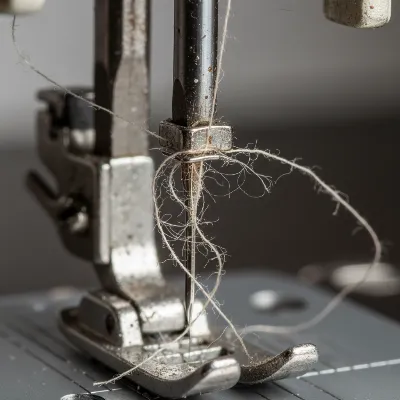 A close-up of a damaged sewing machine needle with a broken thread
Poor Thread Quality or Type
|
Our Picks for the Best Sewing Machine in 2026
As an Amazon Associate I earn from qualifying purchases.
|
||
| Num | Product | Action |
|---|---|---|
| 1 | Brother CS7000X Computerized Sewing and Quilting Machine, 70 Built-in Stitches, LCD Display, Wide Table, 10 Included Feet, White |

|
| 2 | Brother Sewing and Quilting Machine, XR3774, 37 Built-in Stitches, Wide Table, 8 Included Sewing Feet |
|
| 3 | Janome Cat Fancy Easy-to-Use Sewing Machine with Interior Metal Frame, Bobbin Diagram, Tutorial Videos, Made with Beginners in Mind!, Multi-Color |
|
| 4 | Brother FB1757X Mechanical Sewing Machine |
|
| 5 | Brother XM2701 Sewing Machine, Lightweight, Full Featured, 27 Stitches, 6 Included Feet |
|
| 6 | SINGER Heavy Duty 4423 Meltwater Blue High Speed Sewing Machine with Accessory Kit | Strong Motor With Enhanced Piercing Power, 97 Stitch Applications, Full Metal frame, 1-step Buttonhole & LED Light |
|
| 7 | Brother RLX3817 17-Stitch Sewing Machine, White(Renewed) |
|
| 8 | SINGER Heavy Duty 4411 High-Speed Sewing Machine with Accessory Kit | Strong Motor, Enhanced Piercing Power, 69 Stitch Applications, Full Metal Frame, 4-Step Buttonhole & LED Light, Grey |
|
| 9 | SINGER Heavy Duty 4452 High-Speed Sewing Machine with Accessory Kit | Strong Motor with Enhanced Piercing Power, 110 Stitch Applications, Full Metal Frame, 1-Step Buttonhole & LED Lights, Grey |
|
| 10 | Brother SE700 Sewing and Embroidery Machine, Wireless LAN Connected, 135 Built-in Designs, 103 Built-in Stitches, Computerized, 4" x 4" Hoop Area, 3.7" Touchscreen Display, 8 Included Feet, White |
|
The thread itself can be the weakest link. Low-quality threads are often inconsistent in thickness, prone to fraying, and lack the necessary strength to withstand the forces of sewing. Old or improperly stored thread can become brittle and dry-rotted due to exposure to heat, humidity, or UV light, making it snap easily. Using cotton thread in the top with a strong polyester pre-wound bobbin, for instance, can lead to the top thread breaking because of differing strengths and tensions.
> “The quality of your thread is paramount. Investing in good thread often prevents numerous headaches down the line.” – Lan, Sewing Technician
Machine Maintenance Issues
A dirty or damaged sewing machine can create friction points that shred thread. Lint and dust can accumulate in the bobbin case, under the needle plate, and around tension discs, snagging the thread as it passes through. Over time, nicks or burrs can form on metal components along the thread path—such as thread guides, the needle plate, the presser foot, or the hook assembly—creating sharp edges that weaken and break the thread. Regular cleaning and inspection are vital to prevent these issues.
Step-by-Step DIY Solutions to Stop Thread Breaking
Don’t let a breaking thread derail your sewing joy. Most issues can be resolved with careful troubleshooting and a few simple adjustments. Here’s how to tackle the problem yourself.
Re-thread Your Machine Carefully
This is often the first and most effective step. Even experienced sewists can make subtle threading errors. Start by completely removing both the upper and bobbin threads. Consult your machine’s manual and re-thread from scratch, ensuring each guide, disc, and lever is engaged correctly. Crucially, always thread your machine with the presser foot up; this opens the tension discs, allowing the thread to seat properly. Also, verify that your spool is placed correctly on its pin—some spools unwind best horizontally, others vertically, and improper placement can cause drag and tension problems.
Adjust Tension Settings
Incorrect tension is a leading cause of thread breaks. Begin by returning your tension settings to the default recommended in your machine’s manual. Then, perform a test stitch on a scrap piece of fabric identical to your project material.
- Upper Thread: If the bobbin thread is pulling through to the top of your fabric, your upper tension is likely too tight and needs to be loosened slightly.
- Bobbin Thread: If the top thread is pulling through to the bottom, your bobbin tension might be too tight and should be loosened.
Adjust tension gradually, making small tweaks and testing until your stitches are balanced, with no looping or breakage.
Inspect and Replace Your Needle
A fresh, correct needle is a major upgrade.
- Check for Damage: Remove your current needle and inspect it closely for any dullness, bends, burrs, or a damaged tip. Even microscopic damage can shred thread.
- Correct Size and Type: Ensure your needle size matches your thread weight, and the needle type is suitable for your fabric. For instance, use a denim needle for heavy denim or a ballpoint needle for knits.
- Proper Insertion: Reinsert the new needle fully, with the flat side facing the back of the machine (or as specified by your machine’s manual).
- Regular Replacement: Make it a habit to change your needle after every project, or roughly every 6-8 hours of sewing, to maintain optimal performance and prevent wear-related thread breaks.
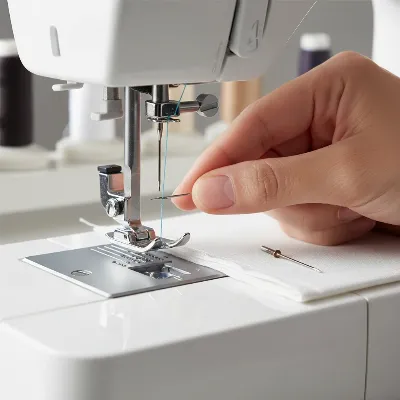 Hand replacing a sewing machine needle with a new one to prevent thread breaking
Choose Quality Thread and Store It Right
The foundation of good sewing lies in quality materials.
- Invest in Quality: Opt for high-quality threads designed for sewing machines, as they are less prone to fraying and snapping than cheaper alternatives.
- Match Threads: For best results, use the same type and weight of thread in both your needle and bobbin. Mismatched threads can create tension issues.
- Proper Storage: Store your threads in a cool, dry, and dark place, away from direct sunlight and humidity. This prevents them from becoming brittle and extends their shelf life. Consider using thread storage boxes to protect them from dust and environmental degradation.
- Thread Conditioner: For older or delicate threads, a thread conditioner can add a protective coating, reducing friction without introducing oils to your machine’s tension discs.
Clean and Maintain Your Sewing Machine
Regular cleaning is preventative maintenance that can drastically reduce thread breakage.
- Lint Removal: Frequently clean out accumulated lint, dust, and debris from the bobbin area, under the needle plate, and around feed dogs. A small brush and lint roller are invaluable tools for this.
- Inspect for Burrs: Carefully examine all parts the thread touches—thread guides, needle plate, bobbin case, and presser foot—for any nicks or rough spots. If you find any, gently smooth them with very fine sandpaper or a needle file.
- Lubrication: Consult your machine’s manual for recommended oiling points and frequency. Proper lubrication ensures smooth operation and reduces friction on the thread.
Optimize Your Sewing Technique
Believe it or not, your sewing habits can contribute to thread breakage.
- Avoid Pulling Fabric: Allow the feed dogs to move the fabric through the machine naturally. Pulling or pushing the fabric can bend the needle, causing it to strike the needle plate or other components, leading to thread breaks.
- Consistent Speed: While it’s tempting to speed through simple seams, maintaining a consistent, moderate sewing speed reduces sudden stresses on the thread and machine components.
When to Seek Professional Help
While many thread-breaking issues are DIY fixable, some persistent problems might indicate an underlying mechanical issue. If you’ve diligently tried all the above troubleshooting steps and your thread continues to break, it might be time to take your machine to a qualified sewing machine technician. They can diagnose complex problems such as incorrect timing, worn internal parts, or hidden burrs that are difficult for a home user to identify.
Conclusion
A snapping thread can quickly turn a joyful sewing session into a frustrating ordeal, but with a systematic approach, you can usually identify and fix the problem yourself. By ensuring correct threading, balancing tension, using the right needle, selecting quality thread, and maintaining a clean machine, you empower yourself to prevent most thread breakage issues. These DIY solutions not only save you time and money but also enhance your sewing experience, allowing you to focus on the creative process rather than technical glitches. Embrace these tips, and you’ll find your sewing machine becoming a reliable partner, consistently delivering beautiful, uninterrupted stitches.
What’s the most unusual reason your sewing machine thread has ever broken?
Frequently Asked Questions
Why does my top thread keep breaking but not my bobbin thread?
If only your top thread is breaking, the issue likely lies with the upper part of your machine. Common culprits include incorrect upper thread tension (often too tight), improper threading through the top guides or tension discs, a dull or incorrect needle, or a burr along the upper thread path such as on the spool pin, thread guides, or needle eye. Always re-thread completely with the presser foot up and inspect your needle for damage.
How often should I change my sewing machine needle to prevent thread breakage?
It is generally recommended to change your sewing machine needle after every 6-8 hours of sewing or at the start of each new project, especially when working with different fabrics or threads. Needles can dull, bend, or develop burrs over time, even if not visibly damaged, which can cause thread to fray and break. Regular needle changes are a simple yet effective preventative measure.
Frequently Asked Questions
Why does my top thread keep breaking but not my bobbin thread?
If only your top thread is breaking, the issue likely lies with the upper part of your machine. Common culprits include incorrect upper thread tension (often too tight), improper threading through the top guides or tension discs, a dull or incorrect needle, or a burr along the upper thread path. Always re-thread completely with the presser foot up and inspect your needle for damage.
How often should I change my sewing machine needle to prevent thread breakage?
It is generally recommended to change your sewing machine needle after every 6-8 hours of sewing or at the start of each new project, especially when working with different fabrics or threads. Needles can dull, bend, or develop burrs over time, even if not visibly damaged, which can cause thread to fray and break. Regular needle changes are a simple yet effective preventative measure.
What are the most common causes of thread breaking in a sewing machine?
The most common causes of thread breaking include improper threading, incorrect tension settings, using a dull or wrong needle, poor quality thread, and a dirty or unmaintained machine. Addressing these five areas systematically will resolve most thread breakage issues.
Can old thread cause my sewing machine thread to break?
Yes, old or improperly stored thread can definitely cause your sewing machine thread to break. Thread can become brittle and dry-rotted due due to exposure to heat, humidity, or UV light, making it snap easily under the machine's tension. Always store thread in a cool, dry, and dark place.
How does incorrect tension lead to thread breakage?
Incorrect tension leads to thread breakage by creating undue stress on the thread. If the upper thread tension is too tight, it pulls aggressively, stretching and breaking the thread. Conversely, excessively loose tension can cause tangles and loops, which also strain the thread and lead to snapping.
Stop Sewing Machine Thread From Breaking
Follow these steps to diagnose and fix common causes of sewing machine thread breaking, ensuring smooth and uninterrupted stitching.
Completely remove both upper and bobbin threads. Consult your machine's manual and re-thread from scratch, ensuring all guides and discs are engaged. Always thread with the presser foot up to open tension discs.
Return tension settings to default and perform a test stitch. Loosen upper tension if bobbin thread pulls to the top; loosen bobbin tension if top thread pulls to the bottom. Adjust gradually until stitches are balanced.
Remove and inspect your current needle for dullness, bends, or burrs. Ensure the needle size and type match your thread and fabric. Reinsert the new needle fully and correctly, changing it every 6-8 sewing hours.
Invest in high-quality threads and use the same type and weight for both needle and bobbin. Store threads in a cool, dry, dark place to prevent brittleness. Consider thread conditioner for older or delicate threads.
Regularly clean lint and debris from the bobbin area and under the needle plate. Inspect thread path components for nicks or burrs and smooth them if found. Lubricate your machine according to the manual.

Thank you for this! My machine was driving me crazy with constant thread breaks, especially on my quilting projects. I followed the advice on regular cleaning and found so much lint built up around the bobbin case. After a good clean, it’s like a brand new machine. No more frustrating snags!
This guide was a lifesaver! I was ready to throw my machine out the window because my thread kept snapping, especially when working with thicker fabrics. Re-threading my machine carefully, as suggested, made all the difference. It turns out I was missing a guide point. Now my projects are going much smoother!
I’ve been sewing for years and still get frustrated with thread breaking. The tip about checking needle problems was really helpful. I didn’t realize how much a slightly bent or dull needle could impact things. Swapped out my old one and the problem almost completely disappeared. Good practical advice.
Most of these tips are pretty standard, but I did appreciate the emphasis on thread quality. I usually buy whatever’s on sale, and maybe that’s my issue. I tried adjusting my tension settings like it said, but it only helped a little. I’ll try investing in some better thread next time and see if that makes a bigger difference.