Replacing a broken sewing machine needle is a fundamental skill for any sewist, ensuring continuous creative flow and preventing damage to both fabric and machine. This guide provides clear, step-by-step instructions for safely changing a needle, from identifying wear signs to selecting the correct type and size, ensuring flawless stitches and optimal machine performance.
What is a Sewing Machine Needle and Why it Matters?
A sewing machine needle is a small, yet incredibly complex, component crucial for creating every stitch. Far from being just a simple pin, it features a shank, shaft, groove, eye, and point, each designed to work in harmony with your machine’s bobbin and thread to form precise, locked stitches. This tiny tool repeatedly pierces fabric at high speeds, guiding the upper thread through the material to meet the bobbin thread below.
The health of your sewing machine needle directly impacts the quality of your work and the longevity of your machine. A sharp, correctly chosen needle glides through fabric effortlessly, preventing snags, skipped stitches, and thread breakage. Conversely, a dull, bent, or incorrect needle can lead to a cascade of problems, from uneven seams and damaged fabric to costly machine repairs. Regular attention to this small part is an investment in your sewing success and machine’s well-being. For explore our sewing machine reviews on this site.
Recognizing the Signs: When Your Needle Needs Changing
Understanding when to replace your sewing machine needle is crucial for maintaining stitch quality and preventing potential machine damage. Many issues arise simply because a needle is worn, dull, or bent, yet these subtle signs often go unnoticed until a problem becomes significant. Paying attention to specific cues can save you time, frustration, and fabric.
Audible Cues
Your sewing machine often “speaks” to you when something is amiss. A healthy needle should pierce fabric with a quiet, consistent rhythm. If you start to hear a distinct “popping,” “thudding,” or even a grinding sound as the needle penetrates the fabric, it’s a strong indicator that the needle point has dulled or bent. This noise signifies the needle struggling to push through the fibers rather than gliding between them, causing undue stress on both the needle and your machine’s motor.
Visible Stitch Issues
The quality of your stitches is a direct reflection of your needle’s condition. If you notice skipped stitches, where the thread doesn’t catch properly, or if your seams appear uneven, loose, or messy, a dull or bent needle is often the culprit. A compromised needle can cause fabric damage, such as snags, pulls, puckering, or small holes, especially on delicate or tightly woven materials. These visible imperfections are clear warnings that your needle is no longer performing optimally.
Physical Inspection
|
Our Picks for the Best Sewing Machine in 2026
As an Amazon Associate I earn from qualifying purchases.
|
||
| Num | Product | Action |
|---|---|---|
| 1 | Brother CS7000X Computerized Sewing and Quilting Machine, 70 Built-in Stitches, LCD Display, Wide Table, 10 Included Feet, White |

|
| 2 | Janome Cat Fancy Easy-to-Use Sewing Machine with Interior Metal Frame, Bobbin Diagram, Tutorial Videos, Made with Beginners in Mind!, Multi-Color |
|
| 3 | Brother Sewing and Quilting Machine, XR3774, 37 Built-in Stitches, Wide Table, 8 Included Sewing Feet |
|
| 4 | Brother XM2701 Sewing Machine, Lightweight, Full Featured, 27 Stitches, 6 Included Feet |
|
| 5 | Brother FB1757X Mechanical Sewing Machine |
|
| 6 | SINGER Heavy Duty 4423 Meltwater Blue High Speed Sewing Machine with Accessory Kit | Strong Motor With Enhanced Piercing Power, 97 Stitch Applications, Full Metal frame, 1-step Buttonhole & LED Light |
|
| 7 | SINGER Heavy Duty 4411 High-Speed Sewing Machine with Accessory Kit | Strong Motor, Enhanced Piercing Power, 69 Stitch Applications, Full Metal Frame, 4-Step Buttonhole & LED Light, Grey |
|
| 8 | Brother RLX3817 17-Stitch Sewing Machine, White(Renewed) |
|
| 9 | SINGER Heavy Duty 4452 High-Speed Sewing Machine with Accessory Kit | Strong Motor with Enhanced Piercing Power, 110 Stitch Applications, Full Metal Frame, 1-Step Buttonhole & LED Lights, Grey |
|
| 10 | Brother SE700 Sewing and Embroidery Machine, Wireless LAN Connected, 135 Built-in Designs, 103 Built-in Stitches, Computerized, 4" x 4" Hoop Area, 3.7" Touchscreen Display, 8 Included Feet, White |
|
Sometimes, a direct inspection of the needle can reveal its hidden flaws. Carefully remove the needle from your machine and place it flat on a table. If it doesn’t lie perfectly flat, it’s bent. You can also gently run your finger or fingernail along the needle’s tip. If it feels rough, catches your nail, or shows any signs of burrs or nicks, it’s dull or damaged. Even microscopic imperfections can severely impact stitch quality, so a visual and tactile check can be highly informative.
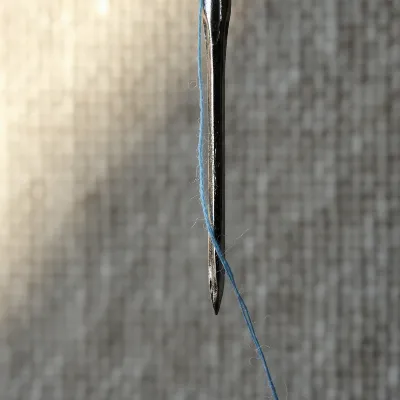 A close-up of a dull or bent sewing machine needle, highlighting the damaged tip against a blurred fabric background.
Understanding Different Sewing Machine Needle Types
Just as different tools are suited for various carpentry tasks, diverse sewing machine needles are designed for specific fabrics and projects. Using the correct needle type is paramount to achieving professional results and preventing damage to both your fabric and your machine. Familiarizing yourself with the common types will significantly improve your sewing game.
Universal Needles
As their name suggests, universal needles are a versatile choice for many woven fabrics like cotton, linen, and some blends. They feature a slightly rounded tip that allows them to pass through fabric fibers without excessively cutting them. While a good starting point, they are not always ideal for very delicate or very thick materials. Their multi-purpose design makes them a staple for general sewing projects.
Ballpoint & Stretch Needles
When working with knit fabrics, stretch, or any material that needs to maintain its elasticity, ballpoint and stretch needles are indispensable. Ballpoint needles have a rounded tip designed to push fabric fibers apart rather than piercing them, which prevents runs, ladders, and damage to the knit structure. Stretch needles offer an even greater ability to flex with elastic fabrics, featuring a special eye and scarf design to prevent skipped stitches on high-stretch materials like Lycra and spandex.
Sharp & Microtex Needles
For projects requiring precision stitching on tightly woven, fine, or synthetic fabrics, sharp or microtex needles are the best choice. These needles boast a very acute, sharp point that cleanly pierces through multiple layers without creating snags or puckers. They are ideal for silks, microfibers, faux leather, and batiks, where a clean, straight stitch line is critical. Their fine point minimizes holes, making them perfect for detailed work.
Specialty Needles (Denim, Leather, Quilting, Twin)
Beyond the common types, a range of specialty needles addresses unique sewing challenges. Denim/Jeans needles have a strong shank and a very sharp point to penetrate heavy, dense fabrics like denim, canvas, and heavy twill without bending or breaking. Leather needles feature a wedge-shaped point that acts like a miniature knife, cleanly cutting through leather and vinyl without tearing. Quilting needles are shorter and stronger, designed to effortlessly pass through multiple layers of fabric and batting. Twin needles (or double needles) create two parallel lines of stitching with a single needle bar, often used for decorative topstitching or creating a faux coverstitch on hems.
Needle Selection Guide: Matching Needle to Fabric and Thread
Choosing the right sewing machine needle is an art and a science, directly impacting your project’s success. The “golden triangle” of fabric, needle, and thread compatibility is key to flawless stitches. Below is a guide to help you make informed decisions, ensuring your needle is always your ally, not your adversary.
| Needle Type | Best for Fabric | Key Characteristics |
|---|---|---|
| Universal | Woven fabrics (cotton, linen, broadcloth, blends) | Slightly rounded tip; general-purpose. |
| Ballpoint (Jersey) | Knits, interlock, fleece, sweatshirt fabric | Rounded tip pushes fibers apart; prevents runs and snags. |
| Stretch | Lycra, spandex, highly elastic knits | Special eye and scarf design to prevent skipped stitches on high-stretch materials. |
| Sharp (Microtex) | Silk, chiffon, microfibers, faux leather, batiks | Very sharp, fine point for precise piercing; minimizes holes. |
| Denim (Jeans) | Denim, canvas, heavy twill, duck cloth | Strong shank, sharp point to penetrate dense fabrics without breaking. |
| Leather | Genuine and artificial leather, vinyl | Wedge-shaped/chisel point cuts cleanly through tough materials. |
| Quilting | Multiple layers of fabric and batting | Reinforced shaft, shorter length for quick, even stitches through thickness. |
| Topstitch | Decorative topstitching, heavier threads | Larger eye and deeper groove for thicker threads; helps create straight, even topstitching. |
| Embroidery | Machine embroidery (dense stitching) | Larger eye to protect delicate embroidery threads, often with a slight ballpoint to avoid fabric damage. |
| Twin Needle | Hems on knits, decorative parallel stitching | Two needles on a single shank; creates two rows of stitching simultaneously. Available in various types (e.g., universal, stretch). |
Understanding needle sizing is equally important. Needles typically display two numbers, such as “90/14” or “70/10.” The first number (e.g., 90, 70) refers to the European sizing system, while the second (e.g., 14, 10) is the American system. In both scales, a larger number indicates a thicker needle, suitable for heavier fabrics and threads. For instance, a 60/8 is a very fine needle for delicate fabrics, while a 100/16 is robust enough for heavy denim or multiple layers. Always match your needle size to the weight of your fabric and thread to ensure smooth sewing and prevent damage.
Your Essential Guide to Safely Replacing a Sewing Machine Needle
Replacing a broken or dull sewing machine needle might seem daunting at first, but it’s a straightforward process that anyone can master. Following these steps carefully will ensure your safety and the optimal performance of your machine. Treat this as a routine maintenance task, and you’ll always be prepared for smooth sewing.
Gather Your Tools & Prepare Your Workspace
Before you begin, ensure you have everything you need. You’ll require a new sewing machine needle (the correct type and size for your project), a small screwdriver (if your machine’s needle clamp has a screw head), and a piece of scrap fabric for testing. Good lighting is also essential to clearly see the small parts you’ll be handling. Keep a small container nearby to safely dispose of the old needle, especially if it’s broken.
Safety First: Power Down and Unplug
This is the most critical step. Always turn off your sewing machine and unplug it from the power outlet. This eliminates any risk of accidental startup, which could cause serious injury. Never attempt to change a needle with the machine still powered on. Your safety is paramount, and taking this extra moment is a small price to pay for peace of mind.
Position the Needle Bar
Next, turn your machine’s handwheel (the large wheel on the right side of the machine) towards you. Rotate it slowly until the needle is in its highest possible position. This provides maximum clearance and makes it easier to access the needle clamp screw and remove the old needle.
Loosen and Remove the Old Needle
Locate the needle clamp screw, usually a small screw on the side of the needle bar. Depending on your machine, you might be able to loosen it by hand or require a small screwdriver. Turn the screw counter-clockwise just enough for the needle to drop free. Hold the old needle gently as you loosen the screw to prevent it from falling into the machine’s inner workings. Once loose, carefully pull the old needle downwards and out. If the needle is broken, handle the pieces with extreme caution to avoid cuts. Immediately place the old needle in your designated safe disposal container.
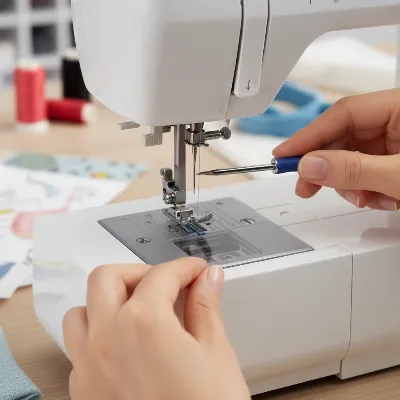 A close-up view of hands carefully removing a broken sewing machine needle with a small screwdriver, emphasizing safety.
Insert the New Needle Correctly
Take your new needle, ensuring it’s the right one for your fabric. Sewing machine needles for home machines typically have one flat side on their shank (the top part). This flat side must face the back of your machine. Slide the new needle up into the needle clamp as far as it will go. You should feel it stop when it reaches the top. It’s crucial that the needle is pushed all the way up and correctly oriented; if it’s not, it can cause skipped stitches, thread breakage, or even hit the bobbin case.
Secure and Test
Once the new needle is fully inserted and correctly oriented, tighten the needle clamp screw firmly. Do not overtighten, as this can strip the screw threads, making future changes difficult. After securing the needle, turn the handwheel manually a few times to ensure the needle moves freely and doesn’t strike the presser foot or needle plate. Finally, plug your machine back in, turn it on, and perform a few test stitches on a piece of scrap fabric. Check for even stitches and smooth operation. If everything looks good, you’re ready to continue your project!
“The smallest detail can make the biggest difference in sewing. A fresh, correctly installed needle is the foundation of every perfect stitch.” – Lan Nguyen, Master Sewing Technician
Common Reasons for Needle Breakage and How to Prevent Them
A broken sewing machine needle is often a symptom, not the root cause, of an underlying issue. Understanding why needles break is the first step toward preventing future incidents and ensuring a smoother sewing experience.
One of the most frequent culprits is using the wrong needle for your fabric. A fine needle forced through heavy denim or multiple layers of fabric is prone to bending and snapping. Conversely, a thick needle on delicate silk can create large, unsightly holes. Always match your needle type and size to the material you are sewing.
Pulling or pushing the fabric while sewing is another common mistake. Let the machine’s feed dogs do their job. Forcing fabric can deflect the needle, causing it to strike the needle plate or bobbin case and break. Similarly, sewing too fast through thick sections or over pins puts excessive stress on the needle. Slow down and carefully remove pins before stitching over them. A needle strike on a pin is almost guaranteed to result in breakage.
Dull or bent needles themselves are also a hazard. Continuing to sew with a needle that shows signs of wear increases its likelihood of snapping. Regular inspection and timely replacement are key. Incorrect threading or tension settings can also contribute. If the upper thread tension is too high, it can create excessive drag on the needle, making it vulnerable to breakage. Always ensure your machine is threaded correctly and tension is balanced.
Lastly, mechanical issues or misalignments within the machine, though less common for DIY fixes, can cause needles to break. If a needle breaks repeatedly despite correct technique and needle choice, it might be time for professional servicing. However, addressing the common user-related factors often resolves most breakage problems.
Pro Tips for Needle Maintenance and Longevity
Beyond simply replacing a broken needle, adopting proactive maintenance habits can significantly extend the life of your needles and ensure consistent, high-quality sewing. Think of these practices as investing in the smooth operation and longevity of your entire sewing setup.
Regular Replacement Schedule: Even if a needle doesn’t break, it becomes dull with use. A general rule of thumb is to change your needle after every 8-10 hours of sewing, or at the start of every new project, especially if you’re switching to a different fabric type. This simple habit prevents issues before they start, ensuring a fresh, sharp point for optimal fabric penetration.
Proper Storage: Keep your new needles in their original packaging or a dedicated needle organizer. This protects them from dust, moisture, and accidental damage, and helps you easily identify their type and size. For used but still good needles, note their type before storing them separately from new ones.
Machine Cleaning: Lint and tiny fabric fibers accumulate in the bobbin area and around the needle plate. This buildup can interfere with thread path, cause tension issues, and indirectly stress the needle. Regularly clean your machine with a small brush to remove debris, ensuring all moving parts operate smoothly.
Don’t Force the Fabric: Allow your machine’s feed dogs to guide the fabric. Pushing or pulling on the fabric, especially through thick seams, can bend or break the needle by deflecting it from its path. Lift the presser foot when pivoting to change direction to prevent unnecessary lateral stress on the needle.
Inspect Needles Before Use: A quick visual check can identify minor bends or burrs before they cause problems. Run the needle tip over your fingernail; if it catches, the needle is dull and should be replaced. This habit is particularly useful if you store used needles or suspect one might have been damaged. By incorporating these professional tips into your routine, you’ll not only reduce needle breakage but also enhance your overall sewing experience and the lifespan of your valuable tools.
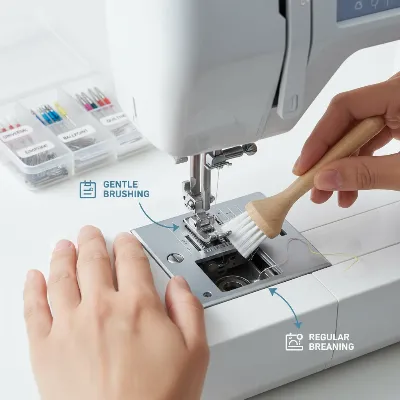 A detailed illustration showing a person cleaning a sewing machine with a small brush, with needles and thread neatly organized in the background, promoting proper maintenance.
Conclusion
Replacing a broken or dull sewing machine needle is a fundamental skill that every sewist, from beginner to experienced, should master. It’s a simple, quick process that not only restores your machine’s functionality but also ensures the quality of your stitches and protects your valuable equipment. By understanding the different needle types, recognizing the signs of wear, and following the clear, safe steps for replacement, you equip yourself to handle common sewing challenges with confidence.
a little proactive maintenance goes a long way. Regularly changing your needle and practicing good sewing habits—like matching the needle to your fabric and allowing the machine to feed—are key to preventing future breakages and maintaining a smooth, enjoyable sewing experience. Don’t let a snapped needle deter you from your creative journey; embrace the opportunity to become a more knowledgeable and independent sewist. What’s the next sewing challenge you’re ready to tackle with your newly honed skills?
Frequently Asked Questions
How often should I change my sewing machine needle?
It is generally recommended to change your sewing machine needle after every 8-10 hours of sewing or at the start of each new project. This ensures a sharp point for optimal fabric penetration and prevents common issues like skipped stitches or fabric damage.
Can I use any needle in my sewing machine?
No, sewing machine needles are not universal. You must choose needles compatible with your machine’s make and model (e.g., home machines typically use flat-shank needles) and appropriate for your fabric type and thread. Using the wrong needle can damage your machine or fabric.
What are the dangers of sewing with a dull or bent needle?
Sewing with a dull or bent needle can lead to several problems, including skipped stitches, uneven tension, thread breakage, fabric snags or puckering, and even potential damage to your sewing machine’s internal components, such as the bobbin case or hook mechanism.
How do I know if my needle is bent if I can’t see it?
To check if a needle is bent, carefully remove it from your machine and place it on a flat surface. If the needle does not lie completely flat or if there is any visible wobble, it is bent and should be replaced immediately.
What should I do with old or broken needles?
Always dispose of old or broken needles safely. Do not throw them directly into the trash, as they can injure sanitation workers. Instead, place them in a hard-sided, puncture-proof container (like an old pill bottle or a specialty needle disposal tin) before discarding.
My needle keeps breaking, even after replacing it. What could be wrong?
Persistent needle breakage often indicates deeper issues. Common causes include pulling/pushing fabric, incorrect thread tension, using the wrong needle for the fabric, sewing over pins, or a mechanical issue within the machine itself. Review your technique and machine settings; if problems persist, consider professional servicing.
Is it necessary to unplug the machine before changing the needle?
Yes, it is absolutely necessary to turn off and unplug your sewing machine before changing the needle. This crucial safety step prevents any accidental activation of the machine, which could lead to serious injury while your hands are near the needle area.
Frequently Asked Questions
How often should I change my sewing machine needle?
It is generally recommended to change your sewing machine needle after every 8-10 hours of sewing or at the start of each new project. This ensures a sharp point for optimal fabric penetration and prevents common issues like skipped stitches or fabric damage.
Can I use any needle in my sewing machine?
No, sewing machine needles are not universal. You must choose needles compatible with your machine's make and model (e.g., home machines typically use flat-shank needles) and appropriate for your fabric type and thread. Using the wrong needle can damage your machine or fabric.
What are the dangers of sewing with a dull or bent needle?
Sewing with a dull or bent needle can lead to several problems, including skipped stitches, uneven tension, thread breakage, fabric snags or puckering, and even potential damage to your sewing machine's internal components, such as the bobbin case or hook mechanism.
How do I know if my needle is bent if I can't see it?
To check if a needle is bent, carefully remove it from your machine and place it on a flat surface. If the needle does not lie completely flat or if there is any visible wobble, it is bent and should be replaced immediately.
What should I do with old or broken needles?
Always dispose of old or broken needles safely. Do not throw them directly into the trash, as they can injure sanitation workers. Instead, place them in a hard-sided, puncture-proof container (like an old pill bottle or a specialty needle disposal tin) before discarding.
Is it necessary to unplug the machine before changing the needle?
Yes, it is absolutely necessary to turn off and unplug your sewing machine before changing the needle. This crucial safety step prevents any accidental activation of the machine, which could lead to serious injury while your hands are near the needle area.
Safely Replace a Sewing Machine Needle
This guide provides essential steps to safely replace a broken or dull sewing machine needle, ensuring optimal machine performance and stitch quality.
Collect a new needle (correct type/size), a small screwdriver, and scrap fabric for testing. Ensure good lighting and have a safe disposal container for the old needle.
Crucially, turn off your sewing machine and unplug it from the power outlet. This prevents accidental startup and potential injury while your hands are near the needle area.
Rotate the machine's handwheel towards you until the needle is in its highest possible position. This provides maximum clearance to access the needle clamp screw.
Locate the needle clamp screw and turn it counter-clockwise to loosen. Gently pull the old needle downwards and out, immediately placing it in your safe disposal container.
Slide the new needle up into the needle clamp as far as it will go, ensuring the flat side of the shank faces the back of the machine. It must be fully inserted and correctly oriented.

Fantastic resource! I’ve been struggling with skipped stitches lately and couldn’t figure out why. Turns out my needle was probably dull, just like it mentioned about the point. Following the guide to safely change it made a huge difference. My machine is running smoothly again, and my projects look so much more professional.
Good info overall, especially the part about preventing damage to fabric and machine. I wish there had been a quick mention about how often to change the needle, even just a general guideline. I know it depends on use, but a little tip would have been nice. Still, it’s a solid guide for someone new to the process.
This guide was a lifesaver! I’ve always been a bit intimidated by changing my sewing machine needle, especially after bending one last month. The step-by-step instructions for identifying wear signs were super clear, and now I feel much more confident. My stitches are looking so much better after putting in a fresh needle.
Really helpful breakdown on why the needle matters so much. I never really thought about the shank, shaft, and eye before, just grabbed whatever was in my needle box. Understanding how each part works with the bobbin and thread makes a lot of sense now. I’ll definitely be paying more attention to selecting the correct type and size from now on.