Most sewing machine jams are fixable with simple DIY troubleshooting, often stemming from incorrect threading, lint buildup, or bobbin issues. By systematically checking these common culprits and applying specific solutions, sewists can quickly resolve tangles and restore smooth operation. This guide provides practical, step-by-step solutions to identify and fix a jamming sewing machine, empowering users to get back to stitching efficiently.
What is a Sewing Machine?
A sewing machine is an indispensable mechanical or electronic device designed to stitch fabric and other materials together with thread. From its humble beginnings as a hand-cranked device in the 19th century to the advanced computerized models of today, the sewing machine has revolutionized clothing production, home decor, and countless craft projects, enabling greater speed, precision, and efficiency in textile creation.
Common Types of Sewing Machines
The world of sewing machines is diverse, catering to various skill levels and project demands. Understanding the different types can help you appreciate their unique contributions to the craft, even when troubleshooting common issues like jamming. For explore our sewing machine reviews on this site.
Home Sewing Machines
These are the most common machines, designed for general household use, from basic repairs to creative projects. They are typically lighter, more portable, and offer a range of decorative and utility stitches. Their user-friendly design makes them ideal for beginners and casual users.
Industrial Sewing Machines
Built for heavy-duty, continuous operation, industrial machines are specialized for specific tasks like straight stitching, serging, or embroidery on a large scale. They are faster, more durable, and designed to handle thick and challenging materials with ease, making them essential in manufacturing.
Mini Handheld Sewing Machines
Compact and portable, mini handheld sewing machines are perfect for quick fixes and on-the-go mending. While not suitable for large projects, their convenience and simplicity make them handy for minor emergencies or simple, straightforward tasks that require mobility.
Electronic Sewing Machines
Featuring digital displays and computerized controls, electronic sewing machines offer advanced functionalities such as a vast array of stitch patterns, automatic needle threading, and precise speed control. They combine the versatility of home machines with enhanced convenience and programmable options for intricate work.
Sewing Machine Comparison Table
| Type of Machine | Price Range (USD) | Key Features | Durability | Suitable Applications |
|---|---|---|---|---|
| Home Sewing Machine | $100 – $700 | Multiple stitches, portable, easy to use | Medium | General sewing, repairs, crafting |
| Industrial Machine | $800 – $5,000+ | High speed, specialized functions | High | Manufacturing, heavy-duty projects |
| Mini Handheld | $20 – $50 | Very portable, basic stitch | Low | Quick repairs, travel mending |
| Electronic Machine | $300 – $2,000+ | LCD screen, automatic features, many stitches | Medium | Quilting, embroidery, complex projects |
How to Choose the Right Sewing Machine (Buying Guide)
Selecting the perfect sewing machine, whether for a hobby or professional use, involves considering several factors to ensure it meets your specific needs and helps avoid future frustrations like jamming.
Determine Your Usage Needs
|
Our Picks for the Best Sewing Machine in 2026
As an Amazon Associate I earn from qualifying purchases.
|
||
| Num | Product | Action |
|---|---|---|
| 1 | Brother FB1757X Mechanical Sewing Machine |

|
| 2 | Brother Sewing and Quilting Machine, XR3774, 37 Built-in Stitches, Wide Table, 8 Included Sewing Feet |
|
| 3 | SINGER Heavy Duty 4423 Meltwater Blue High Speed Sewing Machine with Accessory Kit | Strong Motor With Enhanced Piercing Power, 97 Stitch Applications, Full Metal frame, 1-step Buttonhole & LED Light |
|
| 4 | SINGER Heavy Duty 4411 High-Speed Sewing Machine with Accessory Kit | Strong Motor, Enhanced Piercing Power, 69 Stitch Applications, Full Metal Frame, 4-Step Buttonhole & LED Light, Grey |
|
| 5 | Brother RLX3817 17-Stitch Sewing Machine, White(Renewed) |
|
| 6 | Brother CS7000X Computerized Sewing and Quilting Machine, 70 Built-in Stitches, LCD Display, Wide Table, 10 Included Feet, White |
|
| 7 | SINGER Heavy Duty 4452 High-Speed Sewing Machine with Accessory Kit | Strong Motor with Enhanced Piercing Power, 110 Stitch Applications, Full Metal Frame, 1-Step Buttonhole & LED Lights, Grey |
|
| 8 | Brother SE700 Sewing and Embroidery Machine, Wireless LAN Connected, 135 Built-in Designs, 103 Built-in Stitches, Computerized, 4" x 4" Hoop Area, 3.7" Touchscreen Display, 8 Included Feet, White |
|
| 9 | Brother XM2701 Sewing Machine, Lightweight, Full Featured, 27 Stitches, 6 Included Feet |
|
| 10 | Janome Cat Fancy Easy-to-Use Sewing Machine with Interior Metal Frame, Bobbin Diagram, Tutorial Videos, Made with Beginners in Mind!, Multi-Color |
|
Before anything else, clarify your primary purpose for the machine. Are you looking for a simple tool for occasional mending, a robust machine for daily creative projects, or a specialized device for quilting or embroidery? Your intended use will dictate the features and power you require, influencing how often you might encounter and need to fix a sewing machine that keeps jamming.
Set Your Budget
Sewing machine prices vary widely based on type, brand, and features. Establish a realistic budget and compare models within that range. Investing in a slightly higher quality machine upfront can save you from frequent repairs and frustrating jams down the line.
Evaluate Essential Features
Consider features that are important for your projects. This might include the number of stitch options, automatic needle threaders, adjustable presser foot pressure, or a free arm for cuffs and sleeves. For preventing jams, look for machines with clear threading paths and easy access to the bobbin area for cleaning.
Opt for Reputable Brands
Choosing a machine from a well-known and respected brand often means better build quality, reliable performance, and readily available support and parts. Brands with good customer reviews and a strong reputation for durability are generally a safer bet, potentially reducing the likelihood of a sewing machine that keeps jamming.
Read Reviews and Compare Models
Always take the time to read user reviews and compare different models. Pay attention to comments regarding ease of use, common problems, and maintenance. This research can provide valuable insights into a machine’s real-world performance and help you anticipate potential issues before purchasing.
Choose a Reliable Retailer
Whether buying from a local store or an online retailer, choose a reputable seller who offers good customer service, warranty support, and possibly training or maintenance advice. A reliable retailer can be a great resource for future troubleshooting and ensuring your machine runs smoothly.
Key Features for a Jam-Free Sewing Experience
Beyond basic functionality, certain features can significantly contribute to a smoother, less frustrating sewing experience by preventing common issues like jamming.
- Multiple Stitch Options: While not directly jam-related, a variety of stitches (utility, decorative, stretch) indicates a versatile machine.
- Automatic Buttonhole Function: Simplifies making buttonholes, reducing manual errors that can lead to thread tangles.
- Speed Control: Adjustable speed allows for greater precision, especially on intricate areas or when working with tricky fabrics, minimizing sudden stops that can cause jams.
- Quick-Set Bobbin System: Top-loading, drop-in bobbins are generally easier to set up correctly and less prone to user error, a common cause of bobbin jams.
- LED Lighting: A well-lit workspace improves visibility of the needle and fabric, helping to prevent mis-threading or catching stray fabric.
- Foot Pedal Control: Allows for hands-free speed adjustment, providing better control over the fabric and stitch pace.
DIY Tips for a Sewing Machine That Keeps Jamming
A jammed sewing machine can bring your project to an abrupt halt, but often, the fix is simpler than you think. Here’s how to troubleshoot and resolve common jamming issues, empowering you to quickly fix a sewing machine that keeps jamming.
Immediate Steps When a Jam Occurs
When your sewing machine jams, the first rule is: don’t panic and don’t force it. Forcing the machine can cause more damage to internal components.
- Stop and Turn Off: Immediately stop sewing and turn off the machine. This prevents further entanglement and potential damage to the motor or needle.
- Gently Remove Fabric: Carefully lift the presser foot. Do not yank the fabric. If it’s heavily tangled around the needle or bobbin area, gently snip any visible threads with small scissors to free the fabric.
- Raise the Needle: Use the handwheel to manually raise the needle to its highest position. Always turn the handwheel towards you (counter-clockwise) unless your machine manual specifies otherwise.
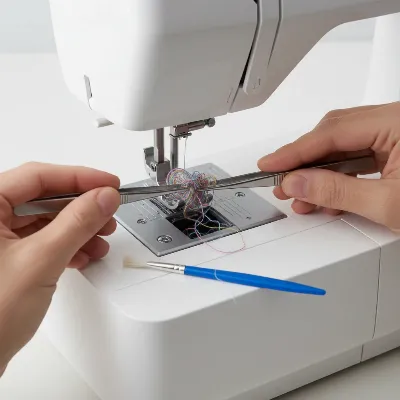 A person gently clearing a thread jam from a sewing machine's bobbin area with tweezers and a small brush
Diagnosing Common Causes & DIY Solutions
Most jams stem from a few recurring issues. By systematically checking these, you can often quickly identify and fix the problem.
Incorrect Threading (Upper & Bobbin)
One of the most frequent culprits is improper threading. Even experienced sewists can miss a guide or fail to seat the thread correctly.
- Solution: Remove both the upper thread and the bobbin completely. Consult your machine’s manual and re-thread both systems from scratch, ensuring the thread passes through all guides, tension discs (with the presser foot up to allow tension discs to open), and the needle eye correctly. Ensure the bobbin is inserted in the right direction.
Lint & Debris Buildup
Lint, dust, and tiny fabric fibers accumulate in the machine’s mechanisms, especially around the bobbin case and feed dogs, obstructing smooth thread movement.
- Solution: Open the bobbin case or slide plate. Use a small lint brush (often included with your machine) and tweezers to meticulously clean out any lint, dust, or tangled thread from the bobbin area, feed dogs, and under the needle plate. Avoid using compressed air, as it can push lint deeper into the machine’s mechanics.
Bobbin Issues (Winding, Placement, Type)
Problems with the bobbin itself are a prime cause of lower thread tangles and jams, often creating a “bird’s nest” underneath the fabric.
- Solution:
- Winding: Ensure the bobbin is wound evenly, not too loosely or too tightly. Rewind if necessary.
- Placement: Check that the bobbin is inserted correctly into its case according to your machine’s diagram or manual.
- Type: Always use the bobbin type specifically recommended for your machine model. Universal bobbins often cause problems.
Thread Tension Problems
Incorrect tension, either too loose or too tight, can cause uneven stitches, thread breakage, or tangling, leading to jams.
- Solution: Set the thread tension to the default or middle setting on your machine’s dial. Test on a scrap piece of fabric. If the upper thread is looping on the bottom, the upper tension is likely too loose. If the bobbin thread is pulling taut and causing puckering, the upper tension might be too tight. Adjust incrementally and test again until stitches are balanced.
Dull, Bent, or Wrong Needle
A damaged or inappropriate needle can cause a cascade of problems, including skipped stitches, fabric snags, and jams.
- Solution:
- Inspect: Carefully examine your needle for any signs of bending, dullness, or a burr (a rough spot).
- Replace: Always replace a bent or dull needle immediately. Needles should be changed after every 8-10 hours of sewing or at the start of a new major project.
- Type/Size: Ensure you are using the correct needle type and size for your fabric. For instance, a ballpoint needle for knits, a sharp needle for wovens, and a heavier needle for denim. Ensure it’s inserted fully and correctly.
Low-Quality Thread
Inexpensive or old thread can be weak, fray easily, or leave excessive lint, all contributing to jams.
- Solution: Invest in high-quality thread from reputable brands. Ensure your thread is fresh and free from knots or fraying. Using matching thread types (same brand/weight) for both upper and bobbin threads can also improve stitch quality and prevent issues.
Sewing Over Thick Seams
Attempting to sew over very thick layers or seams without proper adjustment can cause the machine to struggle and jam.
- Solution: When encountering thick areas, slow down. You might need to adjust the presser foot pressure (if your machine has this feature), use a walking foot, or hand-crank the needle over particularly dense spots. Ensure you’re using a needle appropriate for heavy fabrics.
Preventive Maintenance for a Smooth-Running Machine
Prevention is key to avoiding the frustration of a sewing machine that keeps jamming. Integrating these habits into your routine will ensure your machine runs smoothly for years.
- Regular Cleaning: Make it a habit to clean the bobbin area and feed dogs after every project, or every 8-10 hours of sewing. This removes lint and debris before it can build up and cause issues.
- Change Needles Frequently: A sharp, undamaged needle is crucial. Replace your needle at the start of each new project or after 8-10 hours of use, even if it doesn’t look damaged.
- Proper Threading Habits: Always follow your machine’s manual precisely when threading. Lower the presser foot before you start sewing to engage the tension discs properly.
- Use Quality Supplies: Choose good quality thread and bobbins specifically designed for your machine. Low-quality supplies can be a hidden cause of frequent jams.
- Consult Your Manual: Your sewing machine’s manual is an invaluable resource for specific threading instructions, tension settings, and maintenance tips for your model.
- Regular Oiling (if applicable): Some older or mechanical machines require periodic oiling. Refer to your manual for guidance on where and how often to oil.
> “Many sewing machine problems, including frustrating jams, can be traced back to basic maintenance oversights. A clean machine with a fresh needle and properly threaded bobbin is often a happy machine.” – Lan, Expert Sewing Technician
Conclusion
Encountering a sewing machine that keeps jamming can be a major source of frustration, but with a systematic approach to troubleshooting and regular preventive maintenance, most issues can be resolved quickly and easily. By understanding the common causes—from incorrect threading and lint buildup to needle problems and tension woes—you gain the power to diagnose and apply simple DIY fixes. Cultivating good habits like consistent cleaning, timely needle changes, and using quality supplies will not only extend the life of your machine but also ensure your sewing projects remain a source of joy, not vexation. With these insights, you’re well-equipped to keep your sewing companion running smoothly. What’s the next creative project you’re excited to tackle with your now perfectly functioning sewing machine?
Frequently Asked Questions
Why does my bobbin thread keep bunching underneath the fabric?
Bobbin thread bunching, often called a “bird’s nest,” typically indicates an issue with the upper thread tension or improper upper threading. Ensure the upper thread is correctly routed through all guides and tension discs, and that the presser foot is down when you begin sewing. Adjust the upper tension if it’s too loose.
How often should I clean my sewing machine to prevent jams?
It’s recommended to clean your sewing machine’s bobbin area and feed dogs after every major project or approximately every 8-10 hours of sewing. This prevents lint and fabric debris from accumulating and causing jams, ensuring smooth operation.
Can old thread cause my sewing machine to jam?
Yes, old or low-quality thread can significantly contribute to jamming. Old thread may become brittle, fray easily, or leave excessive lint, all of which can disrupt the delicate balance of the stitching mechanism and lead to tangles and jams.
What is the correct way to insert a sewing machine needle to avoid jamming?
To insert a needle correctly, ensure the flat side of the needle shank faces the back of the machine (for most home machines) and push it up as far as it will go into the needle clamp. Tighten the screw securely. An improperly inserted or loose needle can cause skipped stitches and jamming.
Should I oil my sewing machine to prevent jams?
Some sewing machines, especially older mechanical models, benefit from regular oiling to ensure smooth operation and prevent jams caused by friction. Always refer to your specific machine’s manual for guidance on where, what type of oil, and how often to oil, as not all modern machines require user-applied oiling.
How to Fix a Jammed Sewing Machine
Follow these steps to troubleshoot and resolve common sewing machine jams, getting your machine back to smooth operation quickly.
Immediately stop sewing and turn off your machine. This prevents further entanglement and potential damage to the motor or needle, ensuring safety and minimizing additional issues.
Carefully lift the presser foot and gently snip any visible threads with small scissors to free the fabric. Avoid yanking the fabric, as this can cause more damage to the machine's internal components.
Use the handwheel to manually raise the needle to its highest position. Always turn the handwheel towards you (counter-clockwise) unless your machine manual specifies otherwise, to prevent further entanglement.
Remove both upper thread and bobbin. Re-thread both systems from scratch according to your machine's manual, ensuring correct placement and tension. Improper threading is a common cause of jams.
Open the bobbin case and use a small lint brush and tweezers to meticulously clean out any lint, dust, or tangled thread from the bobbin area and feed dogs. Avoid compressed air, which can push debris deeper.

This guide was a lifesaver! My machine kept jamming, and I was so frustrated. I followed the advice about checking the bobbin and sure enough, it was wound unevenly. Fixed it in minutes and now my stitches are perfectly smooth again. Highly recommend for anyone dealing with constant tangles!
Thank you for this! I was about to take my machine in for repair because of constant thread bunching. Turns out, I was just using the wrong needle for my fabric type, which was causing all the problems. Switched it out and it’s like a brand new machine. So glad I didn’t spend money on a repair!
Some good points, but I was hoping for more advanced troubleshooting. My computerized model has a specific error code for jams that wasn’t really covered. The basic threading and tension tips are solid though, and probably helpful for most common issues. Still, a decent read.
Great tips here! I always forget how much lint can build up, especially with my older Singer. The suggestion to clean out the feed dogs really made a difference. My fabric was dragging before, but now it feeds much better. Wish I’d found this sooner!